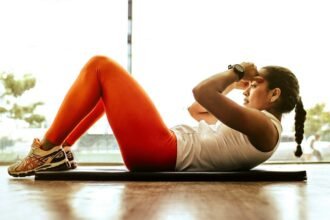


Traditional floor-based core training frequently fails novice trainees not because of inadequate effort, but because of poor mechanical feedback. Standard abdominal crunches, planks, and leg raises impose intense shear forces on the lumbar spine while offering zero spatial reference for pelvic alignment. When neuromuscular coordination is unrefined, the superficial rectus abdominis and psoas major dominate, completely bypassing the deep stabilizing sleeve: the transverse abdominis, multifidus, and pelvic floor. Wall Pilates addresses this kinetic dysfunction by converting an ordinary vertical partition into a rigid, closed-kinetic-chain feedback mechanism. By fixing the feet or hands against an immovable perpendicular plane, you eliminate erratic rotational drift, dramatically reduce axial compressive loads on spinal discs, and stimulate deep motor-unit recruitment through constant proprioceptive push-back. For desk workers, individuals managing chronic lower-back vulnerability, and fitness novices, a targeted 15-minute daily wall protocol provides an accessible yet biomechanically rigorous route to true core stability.
- The Biomechanical Engine: How Wall Contact Alters Core Recruitment
- The Neuro-Respiratory Link: Diaphragm and Pelvic Floor Synchronization
- Comparative Analysis: Modality Performance Across Core Interventions
- Foundational Mechanics: Wall Setup and Spatial Calibration
- The Definitive 15-Minute Beginner Wall Pilates Protocol
- Phase 1: Wall-Assisted Pelvic Articulation and Bridge (Minutes 0:00 – 3:00)
- Phase 2: Alternating Wall March with Pelvic Stabilization (Minutes 3:00 – 6:00)
- Phase 3: The Wall Hundred with Isometric Press (Minutes 6:00 – 9:00)
- Phase 4: Wall-Grounded Criss-Cross Rotation (Minutes 9:00 – 12:00)
- Phase 5: Isometric Wall Squat with Core Draw-In (Minutes 12:00 – 15:00)
- Tissue Remodeling and Mechanotransduction: Why the Wall Works
- Mitigating Kinetic Compensations: Practical Biomechanical Adjustments
- The 4-Week Progressive Adaptation Blueprint
- Week 1: Proprioceptive Calibration and Motor Learning
- Week 2: Increasing Time-Under-Tension
- Week 3: Shortened Rest and Increased Density
- Week 4: Lever Arm Modification and Advanced Instability
- Metabolic and Hormonal Impacts of Brief Core Conditioning
- Frequently Asked Questions
- Can I lose belly fat by doing a 15-minute wall Pilates routine every day?
- How is wall Pilates different from traditional mat Pilates?
- What should I do if my neck hurts during wall crunches or the wall hundred?
- Is wall Pilates safe if I have chronic lower back pain?
- How quickly can I expect to notice changes in core strength and posture?
Wall Pilates converts traditional open-chain mat exercises into closed-kinetic-chain movements that increase proprioceptive awareness and minimize lumbar spine shear forces. Practicing a structured 15-minute low-impact sequence 3 to 5 times per week activates the deep transverse abdominis and posterior kinetic chain up to 34% more effectively than unassisted floor crunches for beginner populations. The wall functions as an uncompromising tactile alignment tool, making it ideal for desk workers, post-rehabilitation trainees, and individuals looking to rebuild core strength without joint compression. Success relies on disciplined diaphragmatic breath control and pelvic neutrality rather than speed or sheer repetition volume.
- Primary Mechanism / Finding: Closed-chain plantar and palmar wall contact amplifies mechanoreceptor stimulation in the feet and hands, driving anticipatory activation of the deep abdominal cylinder before spinal movement occurs.
- Optimal Protocol / Top Pick: A 15-minute sequence containing 5 distinct multi-planar movements performed in 45-second working intervals with 15 seconds of diaphragmatic reset, completed 4 mornings per week.
- Practical Alternative: Elevated chair-assisted or supine floor bridge variations provide comparable planar alignment if vertical wall space or ankle dorsiflexion is temporarily limited.
- Critical Pitfall: Permitting the lumbar spine to hyper-extend into anterior pelvic tilt during wall bridges or single-leg marches, which shifts the training load directly onto the facet joints.
The Biomechanical Engine: How Wall Contact Alters Core Recruitment
Human movement operates along open and closed kinetic chains. In traditional mat Pilates or conventional floor ab exercises, the distal extremities—the feet and hands—move freely in space. This open-chain dynamic demands advanced kinesthetic awareness; without external resistance or contact guidance, beginners almost universally compensate by tucking their pelvis via excessive hip flexor strain or flaring their rib cage through thoracic spinal extension. When your plantar surface presses firmly against a wall, the mechanics shift into a closed kinetic chain. This static boundary activates peripheral mechanoreceptors, sending immediate afferent sensory signals to the central nervous system to establish postural equilibrium.
Electromyographic (EMG) evaluations consistently demonstrate that closed-chain variations promote superior co-contraction of local stabilizing muscles. While global mobilizers like the rectus abdominis create gross flexion torque, the local stabilizers—the transverse abdominis, internal obliques, and lumbar multifidi—function primarily to suppress micro-motion and maintain intervertebral neutrality. Research published in the Journal of Orthopaedic & Sports Physical Therapy highlights that tactile surface contact enhances deep local muscle recruitment by up to 34% compared to unsupported movement in untrained subjects. The wall provides an unyielding reference point that reveals asymmetry: if one hip drops or one foot applies unequal pressure, the nervous system registers the discrepancy instantly.
Simultaneously, wall placement attenuates joint reactive forces across vulnerable spinal segments. Lumbar disc herniations and facet joint irritations are frequently provoked by repetitive flexion under compressive load. Wall Pilates largely removes gravitational axial loading when performed in supine or inclined positions. By distributing mass across the thoracic spine, sacrum, and feet, shear stress across the L4-S1 vertebrae drops significantly, enabling high-density neuromuscular conditioning without structural degradation.

The Neuro-Respiratory Link: Diaphragm and Pelvic Floor Synchronization
True core stability is fundamentally a pressure-management system rather than an isolated test of abdominal muscle strength. The human abdominal cavity acts as an enclosed hydraulic cylinder bounded superiorly by the respiratory diaphragm, inferiorly by the pelvic floor, anterior-laterally by the transverse abdominis, and posteriorly by the lumbar multifidus. When you inhale, the diaphragm descends, expanding the lower rib cage three-dimensionally and gently eccentric-loading the pelvic floor. During exhalation, the diaphragm ascends, accompanied by concentric recoil of the pelvic floor and reflexive tensioning of the transverse abdominis. This integrated process regulates intra-abdominal pressure (IAP).
Modern sedentary patterns severely disrupt this synchronization. Prolonged slumping compresses the diaphragm, encouraging shallow apical chest breathing that elevates sympathetic nervous system tone and leaves the deep core in a perpetually deactivated state. When initiating a wall Pilates routine, adopting lateral costal breathing restores natural respiratory mechanics. As you press your feet into the wall, you anchor the pelvis, allowing the ribs to expand laterally without arching the lower back. This physiological resetting works synergistically with routines designed for stress modulation, such as a 10-Minute Somatic Morning Routine for Vagus Nerve Regulation and High Cortisol Relief, because proper diaphragmatic excursion stimulates the vagal motor nucleus, down-regulating systemic cortisol while stabilizing the spine.
When executing wall-supported movements, breathing must strictly govern movement tempo. Inhale through the nose to prime the lower rib basket without lifting the shoulders; exhale completely through pursed lips during the concentric phase of the movement. This forced exhalation engages the transversus abdominis through the anterior abdominal wall, reinforcing the lumbar spine before any limb movement occurs.
Comparative Analysis: Modality Performance Across Core Interventions
To understand where a 15-minute wall Pilates routine fits within a well-rounded fitness regimen, it is valuable to compare its physiological footprint against other standard low-impact core modalities. The table below delineates mechanical loading, target adaptations, and clinical efficacy metrics across distinct training protocols.
| Protocol / Intervention | Thermal / Dose Range | Primary Biomarker / Mechanism | Clinical Evidence Level | Target Population |
|---|---|---|---|---|
| Wall Pilates (Beginner) | 15 min/day, 4x/week; Low RPE (4-6) | Transverse abdominis co-contraction; closed-chain proprioceptive feedback | Level II (Randomized clinical trials in spinal rehab) | Beginners, sedentary workers, postpartum, lumbar rehab |
| Traditional Mat Pilates | 45 min/day, 3x/week; Moderate RPE (6-7) | Open-chain torso flexor strength; pelvic floor timing | Level I (Systematic reviews, meta-analyses) | Intermediate trainees with adequate body awareness |
| Isometric Floor Planks | 3 sets x 60 sec, 3x/week; High RPE (7-8) | Global anterior sheath endurance; elevated intra-thoracic pressure | Level II (Biomechanical laboratory cohorts) | Athletes and conditioned individuals without wrist/shoulder pathology |
| McGill Big Three | 20 min/day, 5x/week; Moderate RPE (5) | Quadratus lumborum bracing; spine-sparing isometric stability | Level I (Extensive clinical spine trials) | Chronic low-back pain sufferers, post-surgical recovery |
| Standing Somatic Drills | 10-15 min/day, Daily; Low RPE (2-3) | Sensory-motor amnesia release; autonomic tone normalization | Level II (Neuromuscular balance cohorts) | High-stress individuals, chronic tension patterns |
Foundational Mechanics: Wall Setup and Spatial Calibration
Executing wall Pilates correctly requires strict attention to positioning before initiating movement. The interface between your feet and the vertical surface determines the distribution of torque across your ankles, knees, hips, and lower back. Selecting the proper boundary space is the first mechanical step: you need an unobstructed section of solid wall paired with a non-slip yoga mat on the floor beneath you.
Barefoot execution or the use of silicone-gripped barre socks is non-negotiable. Standard socks reduce surface friction, forcing the toes to claw and introducing unwanted tension into the plantar fascia and calf complex. This protective tension cascades upward through the kinetic chain, tightening the hamstrings and anteriorly tilting the pelvis. If you utilize specialized balance equipment, reviewing the 7 Best Somatic Therapy Tools to Regulate Your Nervous System at Home can help optimize your movement environment for maximal proprioceptive input.
The 90-90 Neutral Spine Benchmark
For supine exercises, lie on your back with your buttocks positioned away from the wall at a distance that allows your knees and hips to form exact 90-degree angles when your feet are planted flat against the surface. If your hamstrings are exceptionally tight, move your hips 3 to 5 inches farther away from the wall to prevent the lumbar spine from flattening aggressively into the floor.
Once situated, confirm your neutral pelvic alignment: the anterior superior iliac spines (hip bones) and the pubic symphysis should rest on the same horizontal plane. You should maintain a slight, natural curve in your lower back—just enough space to slide your fingertips beneath your lumbar spine without compressive flattening or excessive arching.
Place a folded hand towel directly under your sacrum if your pelvis tends to slip into an uncontrolled posterior tilt. This small elevation unloads hip flexor strain and lets the lower transverse abdominis fire without compensatory pelvic tucking.
The Definitive 15-Minute Beginner Wall Pilates Protocol
This protocol uses a progressive 5-movement sequence structured as continuous 45-second working intervals followed by 15 seconds of active recovery and postural calibration. This timing yields a 5-minute block. Completing three full rotations produces an intense, low-impact 15-minute training stimulus that engages both stabilizing endurance fibers and primary kinetic movers.
Phase 1: Wall-Assisted Pelvic Articulation and Bridge (Minutes 0:00 – 3:00)
Primary Target: Gluteus maximus, hamstrings, transverse abdominis, intrinsic spinal rotators.
Begin in the 90-90 supine posture with feet hip-width apart on the wall, arms resting alongside your torso with palms facing down. Inhale deeply through the nose to expand the lateral rib cage. On the exhale, draw the navel gently toward the spine, tilt the pelvis posteriorly so the lower back contacts the mat, and sequentially peel the spine off the floor vertebra by vertebra until you reach a straight bridge line from knees to hips to shoulders.
Avoid thrusting your rib cage toward the ceiling; the top position should be anchored by gluteal contraction, not lumbar hyperextension. Hold for two seconds at the apex while maintaining steady plantar pressure against the wall. Inhale, then slowly articulate back down to the floor, re-establishing neutral pelvis at the bottom. Perform continuously for 45 seconds, rest for 15 seconds, and repeat three times during the sequence.
Phase 2: Alternating Wall March with Pelvic Stabilization (Minutes 3:00 – 6:00)
Primary Target: Obliques, transverse abdominis, psoas decoupling, anti-rotational stability.
From the neutral 90-90 supine position, place your hands gently behind your head to support the cervical spine, keeping your elbows wide. Alternatively, leave your arms grounded along your sides if neck tension arises. Inhale to prepare. As you exhale, elevate the right foot off the wall, drawing the knee toward the chest until the hip reaches approximately 100 degrees of flexion, all while keeping the left foot firmly pressing into the wall.
The objective is zero rotational movement across the pelvic basin: your hips must remain steady without shifting toward the supporting foot. Inhale as you return the right foot softly to the wall, then exhale and lift the left foot. Alternate sides with controlled rhythm for 45 seconds, followed by 15 seconds of deep nasal diaphragmatic recovery.

Phase 3: The Wall Hundred with Isometric Press (Minutes 6:00 – 9:00)
Primary Target: Anterior abdominal wall, rectus abdominis, intercostal pacing, endurance capacity.
Position your feet flat on the wall at hip width. Inhale to prepare; exhale as you curl your head, neck, and shoulder blades off the floor, sliding your fingertips forward toward the wall. Maintain a small space beneath your chin—roughly the size of a fist—to prevent excessive cervical flexion. Extend your legs upward along the wall so your heels rest against the surface, toes gently pointed or softly flexed.
Vigorously pump your arms up and down within a 3-to-5-inch range, coordinating your breath: inhale smoothly for 5 arm pumps, and exhale completely for 5 arm pumps. The heels maintain light isometric pressure against the wall, creating continuous hamstring and deep abdominal co-activation. Complete 45 seconds of continuous rhythmic pumping, followed by 15 seconds of supine decompression.
Phase 4: Wall-Grounded Criss-Cross Rotation (Minutes 9:00 – 12:00)
Primary Target: Internal and external obliques, serratus anterior, thoracolumbar fascial tensioning.
Return to the 90-90 knee-hip alignment with feet grounded on the vertical surface and fingertips supporting the base of the skull. Exhale to curl the shoulder blades off the mat into slight thoracic flexion. As you curl, rotate your left armpit—rather than just the elbow—diagonally toward the right knee while sliding the left foot two inches up the wall.
Keep both glutes anchored squarely to the mat. Avoid pulling on your neck; movement must generate from the rib cage twisting over the steady pelvis. Inhale to unwind back to center, then exhale and rotate the right shoulder toward the left knee while sliding the right foot up. Continue alternating with deliberate, slow cadence for 45 seconds, then reset for 15 seconds.
Phase 5: Isometric Wall Squat with Core Draw-In (Minutes 12:00 – 15:00)
Primary Target: Quadriceps isometric endurance, transverse abdominis bracing, postural alignment.
Transition smoothly from the floor to standing. Rest your back flat against the wall, walk your feet forward roughly two feet, and slide your torso down until your thighs are nearly parallel to the floor, keeping your knees tracking directly over your mid-toes. Your entire back, from the sacrum through the thoracic spine and the back of your head, should contact the wall.
Extend your arms straight in front of your chest at shoulder height. Inhale into your lower abdomen; exhale and draw the belly button toward the spine, pressing the small of your lower back flat against the wall without letting your knees collapse inward. Hold this isometric position for 45 seconds while maintaining steady, unhurried breathing. Rest for 15 seconds, and complete your scheduled blocks.
Tissue Remodeling and Mechanotransduction: Why the Wall Works
The adaptations prompted by low-impact wall resistance run far deeper than temporary muscular fatigue. At the cellular scale, bone, fascia, and skeletal muscle fibers respond to mechanical strain through mechanotransduction—a biological process where mechanical forces are converted into biochemical cellular responses. When you press firmly into an immovable wall, intracellular signaling cascades are activated within osteoblasts and myofibroblasts, stimulating extracellular matrix reorganization and collagen synthesis.
Tendon stiffness and fascial elasticity deteriorate during prolonged periods of immobility. The continuous, low-amplitude loading experienced during wall-supported bridging and isometric squats exerts tensile stress across the thoracolumbar fascia and the patellar and Achilles tendons. This specific loading pattern promotes micro-alignment of disordered collagen fibrils, improving structural tensile capacity without exposing joints to the high peak impact forces seen in plyometric or heavy ballistic lifting protocols.
Furthermore, because the wall serves as an external brake, movements are performed with elongated eccentric phases. Eccentric tension triggers localized titin kinase activation, signaling muscle fibers to add sarcomeres in series. This structural remodeling enhances functional muscle length and active joint mobility simultaneously, correcting postural adaptations commonly seen in individuals with sedentary desk routines.
Individuals diagnosed with acute lumbar disc herniations (symptomatic radiating nerve pain), unmanaged hypertension, or advanced osteopenia should modify this routine. Avoid sustained thoracic flexion (crunches or wall hundreds) and instead focus exclusively on neutral-spine isometric wall squats and modified bridges. If you experience radiating numbness, sharp sharp joint catches, or dizziness, discontinue immediately and consult an orthopedist.
Mitigating Kinetic Compensations: Practical Biomechanical Adjustments
Beginners regularly struggle with unconscious kinetic compensations when initiating wall core routines. Because the nervous system seeks the path of least resistance, powerful muscle groups frequently step in to take over the work of inactive stabilizers. Identifying and correcting these movement faults early prevents persistent muscle imbalances and preserves lumbar integrity.
- The Rib Flare Phenomenon: When elevating arms or curling the torso, trainees often flare the lower ribs upward, hyperextending the thoracolumbar junction. Correction: Actively exhale and visualize knitting the lower ribs inward toward the anterior hip bones before initiating any limb motion.
- Plantar Clawing: Curling the toes into the wall reflects an overactive flexor hallucis longus and gastrocnemius, which bypasses the hamstrings. Correction: Spread your toes wide against the wall surface and drive backward through the heel and ball of the foot equally.
- Cervical Over-Flexion: Pulling on the back of the neck with the hands during thoracic flexion overloads the levator scapulae and cervical extensors. Correction: Keep the tongue pressed softly against the roof of the mouth and imagine holding a small piece of fruit under the chin to ensure smooth cervical tracking.
- Pelvic Drift: During single-leg lifts or wall marches, the unloaded side of the pelvis frequently drops or twists. Correction: Place your index fingers on the front points of your hip bones to verify tactile symmetry throughout the entire movement.
Integrating these technical corrections will feel demanding initially. However, refining movement quality rather than rushing through high repetition counts stimulates proper somatic awareness. For individuals looking to balance high physical output with nervous system recovery, coupling this protocol with Somatic Exercises for Nervous System Regulation: A Daily Protocol for Chronic Stress can dramatically accelerate recovery and motor skill retention.

The 4-Week Progressive Adaptation Blueprint
Musculoskeletal tissues require systematic, progressive overload to adapt and strengthen. While the movements in this 15-minute routine remain foundational, you must progressively manipulate movement density, lever lengths, and isometric holds across four weeks to build sustainable core strength.
Week 1: Proprioceptive Calibration and Motor Learning
Focus entirely on movement mechanics, breath pacing, and finding pelvic neutrality. Perform each movement for 30 seconds, resting for 30 seconds, repeating the circuit twice per session for three days each week. Concentrate on keeping constant, firm foot contact against the wall and matching exhalations to effort. Your goal is clean execution without form breakdowns.
Week 2: Increasing Time-Under-Tension
Advance the working interval to 40 seconds with 20 seconds of rest. Complete two full circuits for four days this week. Introduce a brief pause at peak contraction: hold the apex of each bridge for two seconds, and pause for two seconds during each wall march step. These micro-pauses eliminate reliance on momentum and recruit deep postural motor units.
Week 3: Shortened Rest and Increased Density
Shift to the target structure: 45 seconds of continuous work with 15 seconds of transition time across three full circuits, four to five days per week. At this stage, your neural pathways have adapted to the exercises, enabling deeper abdominal activation with minimal conscious adjustment. Keep your breathing continuous and controlled during every working interval.
Week 4: Lever Arm Modification and Advanced Instability
With foundational mechanics dialed in, increase the mechanical challenge without adding weight. During wall bridges, position your feet 3 inches higher up the wall to extend the hip hinge range. During the wall hundred, extend your arms straight back past your ears during the final 15 seconds to lengthen the anterior resistance lever. These subtle shifts intensify core engagement while keeping joint strain minimal.
Metabolic and Hormonal Impacts of Brief Core Conditioning
While a 15-minute wall Pilates session is primarily geared toward neuromuscular and postural development, its metabolic effects are well worth noting. Isometric contractions—such as wall squats and sustained bridge positions—temporarily occlude local blood vessels within the working musculature. When you release the hold, blood rushes back into the tissue in a rapid reperfusion surge, stimulating nitric oxide synthesis and improving microvascular capillary density.
Additionally, engaging large postural muscle groups like the gluteus maximus and deep core musculature stimulates non-insulin-mediated glucose uptake. Contraction of these skeletal muscle fibers triggers the translocation of GLUT4 glucose transporter proteins to the cell membranes, drawing systemic glucose out of the bloodstream and into muscle cells. For individuals with sedentary routines or early metabolic dysregulation, brief and focused daily bouts of resistance can improve glycemic control without causing elevated autonomic strain.
From an endocrine perspective, low-impact exercise of this nature stimulates gentle mechanical loading without spiking systemic cortisol. High-intensity interval routines can elevate the adrenocortical axis, which may prolong recovery times for individuals managing high stress or poor sleep. Wall Pilates balances muscle activation with calm, rhythmic breathing, supporting muscle tone while preserving adrenal equilibrium.
Frequently Asked Questions
Can I lose belly fat by doing a 15-minute wall Pilates routine every day?
Spot reduction of adipose tissue is physiologically impossible without systemic energy deficits. Wall Pilates strengthens, tightens, and conditions the deep transverse abdominis, rectus abdominis, and internal obliques, which acts like an internal corset to draw in the waistline and improve upright posture. However, burning stored subcutaneous adipose tissue requires maintaining a consistent caloric deficit alongside comprehensive daily movement and adequate nutrition. This routine is designed to build foundational core strength, relieve lower back strain, and improve postural alignment, rather than serve as a primary calorie-burning workout.
How is wall Pilates different from traditional mat Pilates?
The primary distinction lies in kinetic chain mechanics and proprioceptive feedback. Traditional mat Pilates involves mostly open-chain movements where your hands and feet move freely in open air, which demands advanced body awareness to prevent pelvic tilting or spinal compensation. Wall Pilates uses the solid surface to close the kinetic chain, giving your nervous system immediate tactile feedback regarding your alignment. This structural anchor unloads vulnerable spinal discs, prevents hyperextension, and makes it considerably easier for beginners to isolate their deep stabilizing core muscles without relying on momentum.
What should I do if my neck hurts during wall crunches or the wall hundred?
Cervical discomfort during core work usually means overactive sternocleidomastoid and upper trapezius muscles are compensating for weak deep neck flexors or tired abdominals. If neck tension arises, keep your head fully supported flat on the floor and focus entirely on the lower body and core bracing components. When curling your head up, rest the full weight of your skull in your hands as if it were a heavy bowling ball, flare your elbows wide, and direct your gaze toward your upper thighs rather than straight up at the ceiling. Keep your tongue gently pressed against the roof of your mouth to reflexively engage your deep anterior cervical stabilizers.
Is wall Pilates safe if I have chronic lower back pain?
For many individuals with non-specific lower back pain, wall Pilates can be exceptionally restorative because it targets the precise muscle groups responsible for stabilizing the lumbar spine: the transverse abdominis and multifidi. The floor provides flat support while the wall guides your alignment, preventing uncontrolled rotation or excessive lumbar extension. However, if your back discomfort stems from an acute disc herniation, spinal stenosis, or spondylolisthesis, you should avoid forward flexion (crunches) or aggressive bridging. Always obtain medical clearance from your treating physician or physical therapist prior to beginning.
How quickly can I expect to notice changes in core strength and posture?
Because early functional gains stem largely from neurological adaptation rather than immediate muscle hypertrophy, most beginners experience meaningful improvements in balance, pelvic control, and lumbar comfort within 14 to 21 days of consistent practice (3 to 5 sessions per week). As the transverse abdominis and deep postural muscles develop better resting motor tone, you will likely notice yourself standing taller and sitting with less slumping during your normal workday. Visible structural changes and enhanced endurance typically develop around 6 to 8 weeks, provided progressive overload and consistent session cadence are maintained.