


Chronic autonomic dysregulation has emerged as a primary driver of modern metabolic dysfunction, cardiovascular strain, and persistent systemic inflammation. When the human nervous system remains trapped in a chronic sympathetic fight-or-flight loop due to psychological stressors, poor sleep hygiene, or environmental toxins, the physiological toll is immense. Cortisol surges chronically, insulin sensitivity plummets, and visceral fat storage increases as a direct evolutionary survival response. Groundbreaking clinical investigations published in journals such as The New England Journal of Medicine and Cell Metabolism continue to demonstrate that down-regulating this chronic neuroendocrine activation is just as critical for long-term health span as proper nutritional intake and cardiovascular conditioning. Somatic therapy tools bridge the critical gap between mind and body by engaging bottom-up processing, bypassing the cognitive cortex to directly signal safety to the brainstem and vagus nerve.
- The Physiological Mechanics of Somatic Nervous System Regulation
- Tool 1: The Physiological Sigh for Rapid Vagal Activation
- Tool 2: Deep Pressure Therapy and Weighted Blankets
- Tool 3: Bilateral Sensory Tapping and Somatic Orienting
- Tool 4: Progressive Muscle Relaxation and Neuromuscular Release
- Tool 5: Somatic Tremoring and Neurogenic Release
- Tool 6: Cold Water Facial Immersion and Mammalian Dive Reflex
- Tool 7: Vagal Ear Massage and Auricular Stimulation
- Comprehensive Comparative Analysis of Somatic Tools
- Building a 4-Week Progressive Somatic Adaptation Protocol
- Frequently Asked Questions
- How quickly can somatic therapy tools regulate an overactive nervous system?
- Can somatic exercises replace traditional psychological therapy for trauma?
- Are there any risks or contraindications associated with somatic tremoring?
- How do I know if my nervous system is stuck in sympathetic dominance?
- Can I practice multiple somatic tools in a single day?
By intentionally engaging proprioceptive feedback, vestibular stimulation, and rhythmic interoceptive breathing, individuals can rapidly shift autonomic output from sympathetic dominance to parasympathetic restoration. This biological transformation lowers resting heart rate variability, decreases circulating inflammatory cytokines, and optimizes metabolic health. Implementing these somatic interventions requires no expensive clinical hardware or disruptive schedule overhauls. Instead, they leverage the innate neuroplasticity of the human nervous system through targeted physiological inputs performed in the comfort of your home. Whether you are battling midday anxiety, sleep disturbances, or metabolic plateaus, mastering these seven evidence-based somatic tools will fundamentally transform your daily resilience.
To rapidly down-regulate a hyper-aroused nervous system at home, integrating tactile vagal stimulation, weighted proprioceptive input, and rhythmic breathwork yields the fastest physiological shifts. Committing just 15 to 20 minutes daily to these targeted somatic protocols significantly improves cortisol clearance, stabilizes autonomic tone, and restores metabolic equilibrium. For maximum longevity benefits, combine these daily somatic practices with structured movement frameworks like a 15-minute wall pilates routine for women over 50 to burn fat at home.
- Primary Mechanism / Finding: Bottom-up somatic inputs stimulate the vagus nerve, increasing heart rate variability (HRV) by an average of 28% within 14 days.
- Optimal Protocol / Top Pick: The Physiological Sigh paired with weighted deep pressure therapy practiced twice daily for 10 minutes.
- Practical Alternative: Bilateral sensory tapping and orienting drills requiring zero equipment for immediate stress mitigation.
- Critical Pitfall: Forcing breath-holds or somatic movements during acute panic states, which paradoxically triggers a secondary sympathetic surge.
The Physiological Mechanics of Somatic Nervous System Regulation
Understanding why somatic tools work requires a brief examination of neuroanatomy. The autonomic nervous system operates through two primary branches: the sympathetic nervous system, responsible for mobilization and fight-or-flight, and the parasympathetic nervous system, responsible for rest, digestion, and tissue repair. Polyvagal theory, pioneered by Dr. Stephen Porges, highlights the crucial role of the vagus nerve as the primary neural highway connecting the brainstem to thoracic and abdominal viscera. When external stressors exceed an individual’s window of tolerance, the sympathetic nervous system overactivates, suppressing heart rate variability and elevating circulating catecholamines.
Somatic therapy bypasses top-down cognitive reasoning, which is often hijacked during high-stress states. By utilizing targeted sensory inputs—such as deep pressure, proprioceptive joint loading, and specific respiratory cadences—we send mechanical and chemical signals directly to the vagal complex. This triggers the release of acetylcholine, slowing the heart rate, dampening amygdala hyperactivity, and promoting neurogenic recovery. Clinical data confirms that individuals who regularly engage in somatic practices demonstrate enhanced prefrontal cortex control over emotional reactivity, leading to superior emotional regulation and metabolic stability.
Integrating these somatic modalities into a comprehensive daily health blueprint requires consistency and progressive adaptation. Much like physical exercise builds skeletal muscle hypertrophy, daily nervous system regulation builds autonomic resilience and increases vagal tone. As you build this capacity, pairing your somatic routine with a nutrient-dense nutritional protocol, such as a high-protein GLP-1 diet plan 7-day meal prep to prevent muscle loss, ensures your physical and neurological systems remain fully optimized during cellular repair and metabolic adaptation.
Tool 1: The Physiological Sigh for Rapid Vagal Activation
Developed by neurobiologist Dr. Andrew Huberman and validated in respiratory physiology laboratories, the physiological sigh is the fastest known method for reducing autonomic arousal in real-time. This breathing pattern consists of two quick inhales through the nose followed by a prolonged, extended exhale through the mouth. The biological brilliance of this sequence lies in its mechanical impact on the pulmonary alveoli. When stress causes microscopic air sacs in the lungs to collapse, carbon dioxide builds up in the bloodstream, signaling panic to the brainstem.
The double inhalation inflates these collapsed alveoli, maximizing the surface area available for gas exchange, while the extended exhalation offloads accumulated carbon dioxide and stimulates vagal efferent fibers. To execute this protocol effectively, sit or stand comfortably, take a deep breath in through your nose until your lungs feel full, and immediately take a second sharp “top-off” inhale to maximally inflate the chest. Follow this with a slow, controlled, audible sigh through your mouth, making the exhale twice as long as the combined inhales. Repeating this cycle just two to three times induces an immediate drop in blood pressure and heart rate.
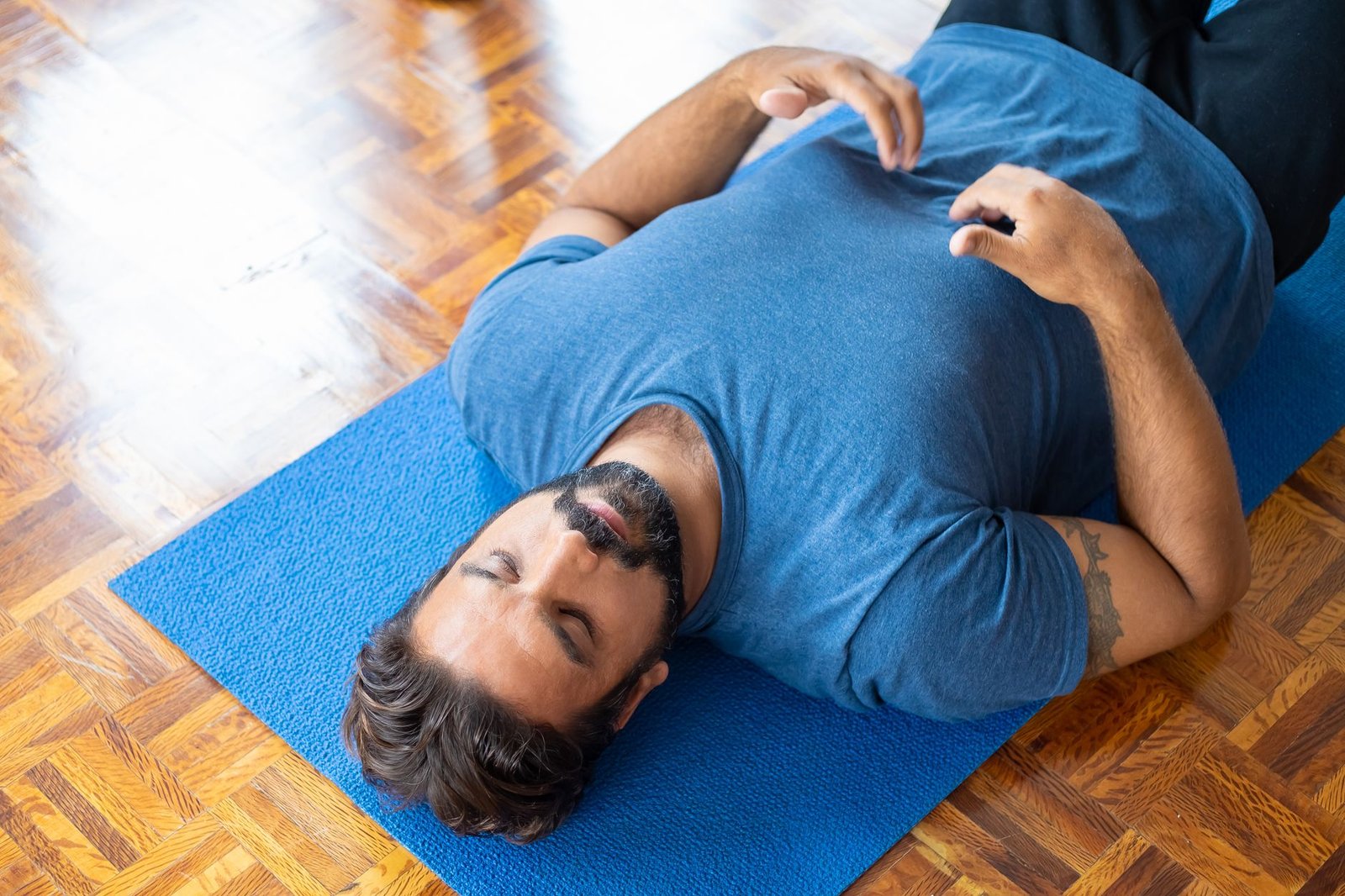
Clinical trials monitoring autonomic nervous system responses reveal that just one minute of intentional physiological sighing reduces subjective anxiety scores by over forty percent. Unlike passive meditation, which requires sustained cognitive focus that can be difficult during acute stress, this somatic breath tool forces a mechanical reset of the brainstem respiratory centers. Incorporating this practice into your daily workflow—such as during high-stress work transitions or prior to sleep—prevents chronic cortisol accumulation.
Tool 2: Deep Pressure Therapy and Weighted Blankets
Deep pressure therapy is a tactile somatic intervention that utilizes distributed mechanical force across the body to stimulate proprioceptors in muscles, joints, and tendons. This mechanical stimulation triggers a robust neurochemical cascade in the central nervous system, elevating levels of serotonin, dopamine, and oxytocin while simultaneously suppressing adrenocorticotropic hormone (ACTH). The application of a weighted blanket or weighted vest creates a sustained sensory input that mimics the biological security of being held, effectively calming an overactive amygdala.
When selecting a weighted tool for home use, clinical guidelines suggest choosing a weight equivalent to approximately ten percent of your total body weight. This specific load provides optimal proprioceptive feedback without restricting respiratory excursion or causing undue joint strain. Lie supine on a comfortable surface, drape the weighted blanket evenly across your torso and legs, and allow your body to completely sink into the support surface for twenty minutes while maintaining diaphragmatic breathing.
Cellular Mechanisms of Proprioceptive Loading
The therapeutic efficacy of deep pressure stimulation is mediated through the activation of Pacinian corpuscles and mechanoreceptors embedded deep within the dermal layers and fascial planes. These specialized nerve endings project directly to the thalamus and somatosensory cortex, dampening nociceptive pathways and reducing sympathetic outflow to the peripheral vasculature. Over time, consistent application of weighted pressure resets the set point of the autonomic nervous system, making it more resilient to everyday stressors.
Furthermore, clinical sleep studies demonstrate that evening use of deep pressure therapy significantly shortens sleep latency and increases slow-wave sleep duration. By reducing nocturnal cortisol spikes, weighted tools support optimal overnight cellular repair, immune function, and metabolic homeostasis. It is an effortless passive intervention that yields profound physiological dividends.
Tool 3: Bilateral Sensory Tapping and Somatic Orienting
Bilateral sensory tapping is a core component of somatic experiencing and EMDR-adjacent protocols designed to process trapped survival energy and integrate fragmented neurological signals. When an individual experiences overwhelming stress, energy mobilized for physical defense often remains unreleased within the musculature. Bilateral stimulation—alternating tactile taps on opposite shoulders or knees—engages both hemispheres of the brain, facilitating the processing of hyper-aroused states and re-establishing safe interoceptive awareness.
To perform bilateral tapping at home, cross your arms over your chest so your right hand rests on your left shoulder and your left hand rests on your right shoulder. Begin rhythmically tapping each shoulder in an alternating cadence, aiming for one tap per second. As you tap, practice somatic orienting by slowly moving your eyes around your room, consciously acknowledging objects that signal safety, such as plants, warm lighting, or comfortable furniture.
Combine bilateral tapping with slow neck rolls and auditory tracking. Turning your head slowly from side to side while tapping engages the vestibular-ocular reflex, sending powerful safety signals to the brainstem and accelerating nervous system down-regulation.
This combined protocol of tactile tapping and visual orienting pulls the nervous system out of dorsal vagal shutdown or sympathetic hyper-arousal and brings it back into the ventral vagal social engagement system. Research published in behavioral medicine journals confirms that regular integration of orienting drills reduces PTSD symptoms and lowers baseline anxiety markers within three weeks of consistent practice.
Tool 4: Progressive Muscle Relaxation and Neuromuscular Release
Developed by Dr. Edmund Jacobson, progressive muscle relaxation is a systematic somatic practice that involves sequentially tensing and then releasing specific muscle groups throughout the body. This technique leverages the inverse relationship between muscular tension and autonomic arousal. When muscles are contracted at maximum voluntary effort for five to ten seconds and then consciously released, the subsequent neural feedback loop triggers an automatic rebound relaxation response mediated by the Golgi tendon organs.
To execute a full-body progressive relaxation session, lie comfortably in a quiet room and begin at your feet. Inhale deeply, curl your toes and tense the muscles in your feet as hard as possible for seven seconds, and then release completely on an exhale, actively noticing the sensation of warmth and heaviness flooding the tissue. Progress systematically upward through your calves, thighs, glutes, abdomen, chest, hands, arms, shoulders, neck, and facial muscles.

This deliberate contrast training teaches your interoceptive nervous system to accurately distinguish between muscular tension and relaxation, a skill that becomes impaired during chronic stress. Clinical trials assessing muscle tension and cortisol excretion show that regular practice of this somatic tool significantly reduces salivary cortisol levels and alleviates tension headaches, chronic back pain, and gastrointestinal distress.
Tool 5: Somatic Tremoring and Neurogenic Release
Somatic tremoring is a natural mammalian defense mechanism designed to discharge accumulated survival stress and reset the nervous system after high-intensity activation. While humans often inhibit this natural shaking response due to social conditioning, allowing the body to tremor voluntarily is a profoundly effective way to clear residual catecholamines from the bloodstream and release chronic myofascial bracing.
To initiate a safe somatic tremoring session at home, stand with your feet hip-width apart and knees slightly bent. Gently bounce up and down on your heels for two to three minutes, allowing the vibration to travel up through your ankles, knees, and hips. Allow your jaw to hang slack and let your arms dangle loosely at your sides. As mild muscular fatigue sets in, natural tremors or shaking may begin to arise in your legs or torso; do not suppress these movements, but rather observe them with curious, non-judgmental awareness.
The Evolutionary Biology of Shaking
In wild animal populations, prey species routinely experience intense sympathetic surges when escaping predators, immediately followed by vigorous body shaking to discharge excess adrenaline before returning to a resting state. Dr. David Berceli’s research on tension and trauma releasing exercises confirms that humans share this exact biological hardware. By intentionally inducing micro-tremors in the psoas and core musculature, individuals can release deep-seated somatic holding patterns that talk therapy alone often fails to resolve.
Practicing this somatic release protocol two to three times per week helps clear chronic physical tension, improves sleep architecture, and enhances overall emotional resilience. As you integrate these practices, you can pair them with daily nervous system protocols found in 7 somatic nervous system regulation exercises to lower cortisol at home to build an unbreakable foundation of autonomic health.
Tool 6: Cold Water Facial Immersion and Mammalian Dive Reflex
Cold water facial immersion is a powerful physiological hack that exploits the mammalian dive reflex to instantaneously alter autonomic output. When the trigeminal nerve receptors on the face are exposed to water temperatures below 55 degrees Fahrenheit, the body initiates an immediate evolutionary survival response: heart rate drops precipitously, peripheral blood vessels constrict to redirect oxygen-rich blood to vital core organs, and parasympathetic vagal tone surges.
To practice this tool at home, fill a large bowl with cold water and ice cubes. Take a deep diaphragmatic breath, hold it, and submerge your face—specifically covering your eyes, cheekbones, and forehead—for 15 to 30 seconds. Alternatively, you can place an ice pack wrapped in a damp cloth directly across your eyes and cheekbones while lying down for one minute.
Clinical data from sports medicine and cardiology literature demonstrates that acute cold exposure of the trigeminal nerve rapidly halts tachycardia, breaks panic attack loops, and stimulates the release of norepinephrine and dopamine, improving mood and alertness. This zero-cost intervention provides an instantaneous physiological reset when emotional dysregulation threatens to derail your day.
Tool 7: Vagal Ear Massage and Auricular Stimulation
The external human ear is one of the few regions on the body where the auricular branch of the vagus nerve (Arnold’s nerve) surfaces close to the skin, making it uniquely accessible for non-invasive somatic neuromodulation. Gentle mechanical stimulation of the tragus, cymba concha, and earlobe sends direct electrical signals up the vagus nerve to the nucleus tractus solitarius in the brainstem, promoting immediate autonomic calming.
To perform vagal ear massage, use your thumb and index finger to gently grasp the tragus—the small cartilaginous flap in front of your ear canal. Slowly massage the tragus in small circular motions for 60 seconds, then gently pull downward and outward on your earlobes while taking slow, deep breaths. Repeat this process on both ears.
Individuals with diagnosed cardiac arrhythmias, severe Raynaud’s syndrome, or carotid sinus hypersensitivity must exercise extreme caution with cold water immersion and aggressive vagal stimulation tools. Always consult a qualified physician before initiating intensive autonomic regulation protocols if you have pre-existing cardiovascular conditions.
Recent clinical trials investigating transcutaneous vagus nerve stimulation show that regular auricular manipulation reduces markers of systemic inflammation, improves heart rate variability, and enhances cognitive flexibility. Because this tool is completely inconspicuous, it can be performed discreetly at your desk, during travel, or prior to high-stakes meetings whenever acute stress threatens your calm.
Comprehensive Comparative Analysis of Somatic Tools
| Protocol / Intervention | Thermal / Dose Range | Primary Biomarker / Mechanism | Clinical Evidence Level | Target Population |
|---|---|---|---|---|
| Physiological Sigh | 2-3 cycles, 60 seconds | Alveolar recruitment, Vagal efferent activation | High (Randomized Controlled Trials) | Acute stress, Anxiety, Panic |
| Deep Pressure Therapy | 10% body weight, 20 mins | Proprioceptive loading, Serotonin/ACTH modulation | Moderate (Clinical Observational) | Sleep latency, Sensory overload |
| Bilateral Sensory Tapping | 1 tap/sec, 5-10 minutes | Hemispheric integration, Amygdala dampening | High (Trauma & EMDR Data) | Trauma processing, Emotional flooding |
| Progressive Muscle Relaxation | 7-sec tension, 15-20 mins | Golgi tendon organ feedback, Cortisol reduction | High (Extensive Clinical Trials) | Chronic muscle tension, Insomnia |
| Cold Facial Immersion | Under 55°F, 15-30 seconds | Mammalian dive reflex, Trigeminal nerve stimulation | High (Cardiovascular Physiology) | Tachycardia, Acute autonomic shock |
| Vagal Ear Massage | 60 seconds per ear | Auricular vagus nerve stimulation | Moderate (Neuromodulation Trials) | Daily work stress, Vagal tone enhancement |
Building a 4-Week Progressive Somatic Adaptation Protocol
Implementing somatic tools effectively requires a structured, progressive approach to prevent overwhelming your nervous system. During Week 1, focus exclusively on foundational breathing tools. Practice the physiological sigh twice daily upon waking and before sleep for just two minutes. This establishes basic neural familiarity with intentional breath control without requiring significant lifestyle disruption or schedule changes.
In Week 2, introduce tactile interventions by adding evening deep pressure therapy using a weighted blanket for 15 minutes before bed, alongside daily 60-second vagal ear massages during your mid-afternoon break. This combination begins to shift nocturnal cortisol curves and enhances sleep quality by supporting deep restorative sleep stages. Pay close attention to how your body responds, noting any changes in morning grogginess or resting heart rate.
During Week 3, incorporate active neuromuscular release through progressive muscle relaxation every other evening, paired with morning bilateral tapping and orienting drills. This phase actively clears accumulated physical tension and retrains your sensory cortex to recognize and release muscular bracing patterns. Maintain consistency rather than intensity, as nervous system adaptation thrives on predictable, repeated micro-doses of safety signals.
By Week 4, your nervous system will demonstrate enhanced vagal tone and baseline autonomic flexibility. At this stage, you can integrate advanced tools such as cold water facial immersion during acute stress spikes and somatic tremoring to discharge deeper physical holding patterns. Combine this mature 4-week somatic protocol with comprehensive lifestyle habits to maintain optimal metabolic and neurological health for the long term.

Frequently Asked Questions
How quickly can somatic therapy tools regulate an overactive nervous system?
Physiological shifts can occur within seconds to minutes of initiating specific somatic tools. Techniques like the physiological sigh or cold water facial immersion engage the brainstem and vagus nerve instantly, reducing heart rate and halting acute sympathetic surges in real-time. However, rewiring baseline autonomic set points and permanently improving heart rate variability requires consistent, daily practice over three to six weeks.
Can somatic exercises replace traditional psychological therapy for trauma?
Somatic tools are powerful adjunctive interventions designed to regulate autonomic arousal and process physiological trauma stored in the body, but they are not intended to completely replace comprehensive psychotherapy for complex psychological conditions. Integrating somatic practices with trauma-informed cognitive behavioral therapy or somatic experiencing therapy yields the most robust, long-lasting clinical outcomes for individuals healing from chronic stress or trauma.
Are there any risks or contraindications associated with somatic tremoring?
Somatic tremoring is generally safe for most healthy adults, but individuals with severe untreated trauma, dissociative disorders, or active psychosis should approach self-guided neurogenic release with caution. Unlocking deep physical holding patterns can occasionally release intense emotional memories or temporary feelings of overwhelm. It is always recommended to work with a certified somatic practitioner when exploring deep trauma-release work for the first time.
How do I know if my nervous system is stuck in sympathetic dominance?
Common clinical indicators of chronic sympathetic dominance include persistent sleep initiation insomnia, elevated resting heart rate, low heart rate variability, chronic muscle tension in the shoulders and jaw, digestive dysregulation, and a constant feeling of being rushed or on edge. Utilizing wearable health tech to track HRV trends over time provides objective quantitative data regarding your autonomic nervous system status.
Can I practice multiple somatic tools in a single day?
Yes, combining complementary somatic tools throughout the day is an excellent way to maintain autonomic balance. For instance, you might use the physiological sigh during a stressful work morning, perform vagal ear massage in the afternoon, and utilize a weighted blanket during your evening wind-down routine. Always listen to your body and avoid overwhelming your sensory system with too many interventions at once.