



Ramen is not a meal plan. It’s a slow system failure with noodles. Here’s how to eat like a functional human being on the tightest operational budget possible.
- The Health Debt Nobody Warns You About
- 🛒 The $50 Procurement List: Strategic Allocation by Category
- Protein — $18 allocation
- Carbohydrates — $10 allocation
- Vegetables — $12 allocation
- Fats and Staples — $10 allocation
- 🍳 The Meal Protocol: Three Rotations, Zero Decisions
- Breakfast Rotation (3 options, alternate throughout the week)
- Lunch — Batch Processed, Not Daily Decided
- Dinner Rotation (3 options)
- ♻️ The Zero-Waste Strategy: Buy Staples, Not Components
- 🗓️ The Sunday Batch Routine: The 2-Hour Maintenance Window
- 📈 The Results: What Actually Changes After a Month
- 🏁 The Lazy Verdict
- ❓ FAQs — Honest Answers
The Health Debt Nobody Warns You About
“Let’s talk about the biggest lie I believed in college: ‘Eating healthy is expensive.’ The truth is, mastering budget meals is more about engineering than money.”
In my second year, I ran a very convincing experiment in self-destruction.
Breakfast was skipped or replaced with coffee. Lunch was whatever was cheapest and closest — usually something from a vending machine or a $2 packet of instant noodles from the corner store. Dinner was ramen, or ramen’s slightly more sophisticated cousin, instant pasta with a sad handful of whatever vegetable had survived the week in my refrigerator.
I thought I was being financially efficient. I was spending maybe $25 a week on food and congratulating myself on the savings.
What I was actually running was a health debt — borrowing energy from my future self by underfueling the present one, accumulating a deficit that would eventually invoice me at the worst possible time.
The invoice arrived during a three-week stretch in November. I was foggy from 10 AM onward every single day. The 8km bike commute that usually took 22 minutes was taking 28. I sat in a two-hour seminar and retained approximately nothing, not because the material was difficult but because my brain was running on a caloric deficit and processed carbs and was genuinely not capable of higher-order function.
That’s system downtime. Not the dramatic kind — the slow, grinding, invisible kind where you’re technically operational but running at 40% capacity without knowing it. And the cause wasn’t stress or sleep deprivation or a difficult semester. It was just bad fuel logistics.
Here’s the thing about cheap food: it’s not actually cheap. A $0.25 packet of ramen costs you two hours of cognitive fog the next morning. A $4 vending machine lunch costs you the afternoon focus you needed to not have to re-read those same three pages four times. The price at the register is not the total cost of the transaction.
Budget meals done right are not about spending the least amount of money. They’re about getting the best operational output per dollar spent. That’s a completely different optimization target — and it’s one that a $50 weekly grocery budget can absolutely hit, if you approach it like a logistics problem rather than an afterthought.
“Ramen is not a budget meal. It’s a deferred maintenance bill that arrives with interest during your most important week of the semester.”
🛒 The $50 Procurement List: Strategic Allocation by Category
Fifty dollars is a tight constraint. In 2026, with grocery prices where they are, it requires strategic procurement — not impulse buying, not brand loyalty, not recipe-specific shopping. You’re buying systems, not meals.
Here’s how I allocate the $50 across the four fundamental categories:
Protein — $18 allocation
Chicken thighs (2 lbs) — ~$5.50 Chicken thighs have better mechanical reliability than breasts. They’re harder to overcook, more forgiving during batch processing, and significantly cheaper per gram of protein. They also have more fat, which means more flavor without adding ingredients. If you’ve been buying chicken breasts because they seem healthier, you’ve been paying a premium for the privilege of drier, less forgiving protein that requires more skill to cook well. Switch to thighs.
Canned tuna or tuna pouches (4 units) — ~$5 Zero prep. Shelf-stable. 20–25g of protein per unit at roughly $1.25 each. The tuna pouch format means no can opener, no liquid to drain, no equipment. It goes directly from pantry to plate. For budget meals, this is the lowest-friction protein source available.
Eggs (one dozen) — ~$4.50 Still the most complete protein unit per dollar despite 2026 prices. Six grams of complete protein, healthy fats, choline, vitamin D, and a preparation flexibility that no other protein source matches. Scrambled, hard-boiled, fried, in fried rice — eggs integrate into every meal format without complaint.
Dried lentils or canned chickpeas — ~$3 Plant protein that doubles as a carbohydrate source. Lentils cook in 20 minutes without soaking, cost almost nothing per serving, and provide 18 grams of protein per cooked cup alongside 15 grams of fiber. They are the most underused budget meal component in the student kitchen.
Carbohydrates — $10 allocation
Oats (large container) — ~$4 Rolled oats are the most cost-efficient breakfast fuel available. Complex carbohydrates with moderate protein, fiber that slows glucose absorption, and a preparation time of three minutes. One large container lasts two to three weeks and costs less than a single campus breakfast.
Brown rice or white rice (2 lb bag) — ~$3 The operational base for most dinners. Rice pairs with every protein source, scales infinitely, reheats well, and costs almost nothing per serving. White rice cooks faster. Brown rice has more fiber and nutrients. Pick based on your patience levels.
Whole grain bread (one loaf) — ~$3 For quick lunches, toast breakfasts, and the occasional sandwich that requires zero cooking. Buy the store-brand whole grain. It’s the same nutritional profile as the branded version at 40% less cost.
Vegetables — $12 allocation
Frozen mixed vegetables (2 large bags) — ~$5 Frozen vegetables are pre-optimized. They’re harvested at peak nutritional density, flash-frozen within hours, and require no prep beyond opening the bag. The “fresh is always better” narrative is a marketing position, not a nutritional fact. Frozen broccoli, peas, corn, and mixed blends frequently have higher vitamin retention than fresh produce that’s been sitting in transit and display for a week. Stop paying fresh premiums when frozen does the same job for less money.
Fresh spinach or kale (one bag) — ~$3 For things that genuinely require fresh — eggs, salads, anything that needs to wilt quickly. One bag lasts a week if you use it deliberately.
Frozen edamame (one bag) — ~$2.50 Protein and vegetable simultaneously. 17 grams of protein per cup, 8 grams of fiber, and it microwaves in 90 seconds. One of the most efficient budget meal components available.
Bananas and seasonal fruit — ~$1.50 Bananas are still among the cheapest fruit per calorie on the market. They’re pre-portioned, portable, and provide fast carbohydrates that are genuinely useful before the 8km bike commute. Buy whatever other fruit is cheapest in season.
Fats and Staples — $10 allocation
Peanut butter (large jar) — ~$5 8 grams of protein per two tablespoons, calorie-dense, shelf-stable for months, and functional in six different meal contexts. On toast. With fruit. In oatmeal. Straight off a spoon at 11 PM when the alternative is the vending machine. The large jar lasts three weeks minimum.
Olive oil or vegetable oil (small bottle) — ~$3 Every batch cooking session requires fat. This is a maintenance cost.
Salt, pepper, garlic powder, cumin — ~$2 If you don’t have a spice baseline, budget meals taste like institutional food and you’ll abandon the system within a week. Four spices cover 80% of cooking scenarios. This is a one-time $2 investment that pays returns for months.
🍳 The Meal Protocol: Three Rotations, Zero Decisions
Decision fatigue is a real metabolic cost. Every choice you make in a day depletes executive function. The goal of a budget meal protocol is to reduce food decisions to near zero — not because food doesn’t matter, but because your brain needs those cycles for things that matter more.
Breakfast Rotation (3 options, alternate throughout the week)
Option A: Overnight Oats Rolled oats, a scoop of peanut butter, frozen berries thawed overnight, splash of milk or water. Assembled in 90 seconds the night before. Grab it from the fridge in the morning. Zero morning preparation required.
Option B: Eggs and Toast Two eggs (any preparation), two slices of whole grain toast. Twelve minutes including cooking time. Add spinach to the pan if you have it.
Option C: Banana and Peanut Butter For mornings before the bike commute when you need fast carbohydrates and portable fuel. One banana, two tablespoons of peanut butter. Eaten in the 3 minutes before you put on your helmet. Functional, not glamorous.
Lunch — Batch Processed, Not Daily Decided
Lunch is the meal that breaks most budget meal systems because it requires preparation at the worst possible time — between morning obligations and afternoon lectures, when you have neither time nor energy to cook.
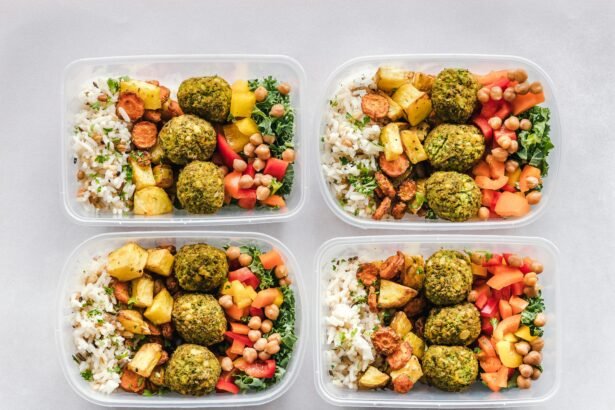
The fix is batch processing. On Sunday, you make one large format lunch item that portions into five servings. During the week, you grab a container from the fridge. Zero decisions. Zero preparation. Zero friction.
The default batch lunch: Cook a large pot of rice. Roast two pounds of chicken thighs with salt, pepper, and garlic powder. Portion rice and chicken into five containers with a handful of frozen vegetables (microwaved). That’s five lunches for approximately $9 in ingredients. $1.80 per lunch. Less than the cost of anything available on campus.
Dinner Rotation (3 options)
Option A: Rice, lentils, and frozen vegetables Cook lentils with cumin and garlic powder. Serve over rice with microwaved frozen vegetables. 25 grams of protein, high fiber, costs roughly $1.50 per serving. Genuinely satisfying when seasoned properly.
Option B: Egg fried rice Day-old rice (made during Sunday batch), two eggs scrambled in, frozen peas and corn, soy sauce if you have it. 15 minutes. High protein, high carbohydrate for recovery after evening training.
Option C: Tuna, rice, and edamame Open a tuna pouch. Serve over rice with microwaved edamame. Add salt and lemon if available. This sounds too simple to be satisfying. It is consistently satisfying. Simplicity is not a flaw in a budget meal system — it’s the feature that makes the system sustainable.
♻️ The Zero-Waste Strategy: Buy Staples, Not Components
Here’s the design flaw in most people’s grocery approach:
They plan specific recipes, buy specific ingredients, use 60% of each ingredient, and throw away the rest when it goes bad before the next recipe that uses it comes around.
This is wasteful procurement driven by recipe-first thinking. A bunch of cilantro bought for one recipe costs $1.50 and uses three sprigs. The rest goes yellow and gets thrown away. Multiplied across every recipe-specific ingredient, you’re losing $10 to $15 per week to food waste — which, on a $50 budget, is a 20 to 30% operational loss.
The fix is staple-first procurement. Buy things that integrate into multiple meal formats without waste. Rice goes in lunch bowls, dinner, fried rice, and as a side for anything. Eggs go in breakfast, fried rice, and anywhere that needs protein. Frozen vegetables go in everything. Peanut butter goes in breakfast, snacks, and sauces.
Every item on the $50 list above touches at least three different meals. Nothing is bought for a single recipe and then abandoned. This is how budget meals become genuinely sustainable rather than temporarily functional until you run out of energy to maintain the system.
🗓️ The Sunday Batch Routine: The 2-Hour Maintenance Window
Sunday afternoon. Two hours. Everything you need for the week.
The sequence:
Start the rice cooker or pot of rice first — it takes the longest and requires no attention once running.
While rice cooks, season and roast your chicken thighs (400°F, 35–40 minutes). While chicken roasts, hard-boil your dozen eggs (12 minutes, then ice bath).
While eggs cool, prep your overnight oats for Monday morning (90 seconds). Portion your batch lunch containers.
When chicken is done, portion it with rice and microwave a bag of frozen vegetables. Stack five lunch containers in the fridge. Put hard-boiled eggs in a separate container. Put overnight oats in the fridge.
Total active time: approximately 45 minutes. The rest is waiting for cooking that requires no intervention.
You now have: five lunches, twelve ready-to-eat protein units, Monday breakfast, and all your staples organized. The week’s budget meal system is operational. Daily food decisions have been reduced to choosing between three breakfast options and three dinner options — and even that’s low enough cognitive load to run on autopilot.
This is the 2-hour maintenance window that saves you 10 hours of decision-making, reactive cooking, and expensive convenience purchases across the rest of the week.
📈 The Results: What Actually Changes After a Month
Week 1 and 2: Adjustment friction. You’re building the habit of Sunday batch prep and resisting the impulse to buy convenience items when you’re tired and the prepped food requires the 30 seconds of effort to retrieve and heat.
Week 3 and 4: The system starts running automatically. Sunday prep becomes a non-negotiable routine rather than a deliberate choice. You stop making food decisions at 7 PM when you’re depleted.
After one month:
The brain fog that was a daily feature of the ramen-and-vending-machine diet starts lifting. Not dramatically — gradually, then noticeably. The 8km morning commute feels easier because you’re fueled properly rather than running on coffee and processed carbohydrates that spike and crash before you’ve reached the second kilometer.
Operational bandwidth in lectures improves. This is the result that surprised me most the first time I ran this experiment properly. Actual comprehension and retention during class — the thing you’re ostensibly at university for — improves measurably when your brain is receiving adequate protein, complex carbohydrates, and micronutrients from vegetables rather than surviving on sodium and refined carbs.
The $0 convenience food line in your weekly budget is genuinely satisfying. When you have prepped food in the fridge, the vending machine stops being a temptation and starts being a visible ripoff. You can see clearly that $4.25 for a bag of chips is an irrational transaction when you have five containers of real food waiting at home.
🏁 The Lazy Verdict
Fifty dollars a week is not a lot of money. In 2026, it requires strategic procurement, zero-waste thinking, and one two-hour Sunday window. It is not convenient. It is not effortless.
But budget meals done right are the highest ROI investment in your own operational performance that you can make as a student. Better than a new laptop. Better than a premium study app. Better than the $6 campus coffee that gives you 45 minutes of alertness followed by a crash.
The ramen diet is not cheap. It’s expensive in deferred costs — cognitive performance, physical recovery, and the specific misery of sitting in a lecture at 2 PM feeling like your brain has buffered and refused to load.
Eat the chicken and rice. Prep it on Sunday. Run the system.
❓ FAQs — Honest Answers
Can I budget for coffee?
Yes, within reason — and the operative word is budget. One coffee per day, made at home or bought from the cheapest available source, is a legitimate operational expense. Three $5 campus lattes per day is a $105 monthly line item that is quietly destroying your food budget. Home-brewed coffee costs approximately $0.20 per cup. A basic drip coffee maker is a one-time $15 purchase that pays for itself in three days. Run the math and make a decision.
What if I genuinely hate tuna?
Then don’t buy tuna. The protein budget line is a category, not a mandate. Canned sardines are cheaper and have more omega-3 fatty acids. Canned salmon works. Edamame plus lentils covers the protein requirement without any fish product. The system is built on principles — adequate protein, complex carbohydrates, real vegetables, healthy fats — not on specific ingredients. Swap within the category for whatever you’ll actually eat. A budget meal system you abandon because you hate everything in it has zero operational value.
Is frozen food actually nutritionally okay?
Yes. Frozen vegetables are harvested at peak ripeness and flash-frozen within hours of leaving the field. Fresh produce is typically harvested before full ripeness to survive transit, stored in controlled atmosphere warehouses, shipped, and displayed for days before purchase. In many cases, the frozen vegetable has higher vitamin retention than the “fresh” version sitting in the produce section on day six of its shelf life. The fresh-is-always-better narrative is a premium pricing justification, not a nutritional position. Buy frozen without guilt.
What if I don’t have time for Sunday prep?
Then you have a scheduling problem, not a food problem — and the solution is still Sunday prep, just done with more urgency. Two hours on Sunday saves you approximately 10 hours of reactive food decisions, convenience purchases, and the specific 45-minute time sink of figuring out what to eat when you’re already hungry and depleted. The math doesn’t change because you’re busy. If anything, the busier you are, the more valuable the batch processing becomes. Protect the two-hour window the same way you protect a deadline.