




I didn’t quit coffee. I demoted it. Here’s what happened when a 10-minute walk became the first input of the day instead of a double espresso.
- The Morning I Realized I Was Medicating, Not Functioning
- 🔬 The Technical Manual: Why Your Biology Already Has a Wake-Up System
- The Cortisol Awakening Response: Your Natural Boot Sequence
- Circadian Rhythm Calibration: The Clock That Runs Everything
- 📅 The 30-Day Experiment: Week by Week
- Week 1: The Withdrawal Phase — System Errors and the Urge to Quit
- Week 2: The Shift — Where Things Got Interesting
- Week 3: Mental Clarity — The Walk as Background Processing Time
- Week 4: Sustainability — Weather-Proofing the System
- ☕ Coffee After the Experiment: Demotion, Not Elimination
- 🏁 The Lazy Verdict
- ❓ FAQs — The Ones That Actually Came Up
The Morning I Realized I Was Medicating, Not Functioning
There’s a specific kind of morning that most students know intimately.
You wake up. The alarm goes off — or the third alarm, let’s be honest. You lie there for a moment in a state that can only be described as “technically awake but operationally offline.” Your brain is present in the same way a loading screen is present: something is happening, but nothing is available yet.
You don’t feel like a person until you’ve had the coffee.
Not tired-but-functional. Actually non-functional. The kind where you wouldn’t trust yourself to make a consequential decision or hold a coherent conversation before the caffeine arrives. The coffee isn’t a preference at this point — it’s a system requirement. Boot sequence mandatory. No exceptions.
I ran this operating mode for about two years. Four cups a day minimum. The first one before I’d been vertical for ten minutes, consumed with the specific urgency of someone addressing a medical situation. The second one around 10 AM when the first wore off. The third at 2 PM to survive the afternoon. The fourth, occasionally, at 5 PM in an act of optimism that reliably punished me around midnight when I couldn’t fall asleep despite being genuinely exhausted.
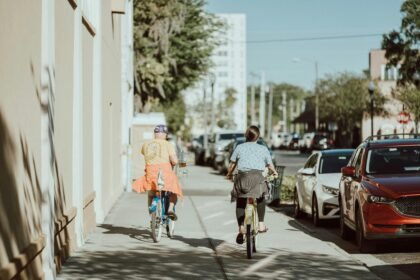
The 8km bike commute felt hard every morning. Focus in lectures was patchy. Sleep quality was mediocre. I was always catching up — on energy, on alertness, on the baseline functional state that felt perpetually just out of reach.
Then I read something that reframed the whole problem.
I wasn’t tired because I needed coffee. I was tired because I’d made coffee the only mechanism for addressing a problem that had a better, cheaper, and more sustainable solution. My circadian rhythm was miscalibrated. My cortisol awakening response was being chemically bypassed instead of naturally activated. And the solution, according to the technical manual, was embarrassingly simple.
Ten minutes of outdoor morning light. Every day. Before the first cup.
I ran the experiment for 30 days. Here’s what happened.
“Coffee doesn’t fix the problem. It bypasses the problem. For a while. Then you need more coffee to bypass it again. That’s not a solution — that’s technical debt with a pleasant taste.”
🔬 The Technical Manual: Why Your Biology Already Has a Wake-Up System
Before the experiment, let me explain the engineering — because once you understand what’s actually happening in your body between 6 and 8 AM, the logic of the morning walk makes immediate sense.
The Cortisol Awakening Response: Your Natural Boot Sequence
Every morning, approximately 30 minutes after you wake up, your body runs a biological boot sequence called the Cortisol Awakening Response (CAR). Your adrenal glands release a natural spike of cortisol — your primary alertness hormone — that’s designed to transition your brain from sleep mode to full operational capacity.
This is your body’s built-in alarm system. No chemicals required. No subscription fees. It’s been running successfully for the entirety of human existence.
The problem: this boot sequence requires a trigger. Specifically, it’s dramatically enhanced by exposure to natural light — particularly morning sunlight, which contains a specific spectrum of short-wavelength light that hits the melanopsin receptors in your retinas and sends a direct signal to the suprachiasmatic nucleus (your brain’s master clock) that it’s time to run the wake-up protocol.
When you roll out of bed and immediately drink coffee in a dim apartment, you’re bypassing this system entirely. You’re chemically forcing alertness without triggering the natural sequence. The cortisol response still happens — but it’s weaker, shorter, and less effective at producing the sustained morning clarity that the full natural sequence delivers.
Caffeine doesn’t create energy. It blocks adenosine receptors — the receptors that signal fatigue. It masks the tired signal without addressing what’s generating it. The moment the caffeine clears your system, the adenosine that’s been accumulating during the block floods back in, which is the physiological cause of the “coffee crash” that hits most regular caffeine users like clockwork at the same time every morning.
Circadian Rhythm Calibration: The Clock That Runs Everything
Your circadian rhythm is a 24-hour internal clock that regulates alertness, metabolism, hormone production, body temperature, and sleep architecture. It is the most important biological system you’re probably not thinking about.
This clock is calibrated by light — specifically, by the timing and intensity of light exposure relative to sunrise. Get bright outdoor light in the morning and your clock runs on schedule: alert during daylight, appropriately tired at night, good sleep quality, good morning energy.
Spend your mornings in artificial indoor light and your clock runs behind. The brain doesn’t get a clear signal that morning has started. Melatonin suppression is incomplete. The full cortisol awakening response doesn’t fire properly. You feel groggy longer, reach for more caffeine, stay artificially alert later in the evening, sleep less deeply, and wake up groggy again the next morning.
A 10-minute morning walk in outdoor light is circadian rhythm calibration. It’s not exercise. It’s not meditation. It’s a precise technical input — natural light, movement, fresh air — that triggers the biological systems responsible for your cognitive performance for the next 12 hours.
This is what the experiment tested.
📅 The 30-Day Experiment: Week by Week
Week 1: The Withdrawal Phase — System Errors and the Urge to Quit
The first week was not pleasant and I want to be upfront about that.
My protocol: alarm goes off, shoes go on, I leave the apartment for a 10-minute walk before touching the coffee machine. Not a long walk. Not an ambitious walk. Just outside, moving, exposed to morning light, for 10 minutes.
Days 1 through 3: The headaches arrived around 8 AM, which is exactly when my brain was used to receiving its first dose of adenosine blockade. This is caffeine withdrawal — mild, but real. I was also groggy longer in the morning, which felt counterproductive and made me genuinely question whether the experiment was worth continuing.
Days 4 and 5: The headaches reduced. The morning grogginess was still present but seemed to resolve faster. I noticed something unexpected on day 5 — I completed the 8km bike commute to campus without feeling like I needed to immediately sit down and consume something stimulating. I was awake. Reasonably awake. Without intervention.
Day 7: Still reaching for coffee. Still wanted it. But the quality of the want had subtly changed — it felt more like preference than necessity. The morning walk was doing something. I couldn’t yet quantify it clearly, but the baseline had shifted.
Week 2: The Shift — Where Things Got Interesting
By week two, the experiment started producing data worth noting.
The 11 AM coffee crash disappeared. Not reduced — gone. My second cup of the day had historically been a non-negotiable around 10:30 to 11 AM because the first cup had worn off and the slide back toward fatigue was steep and fast. During week two, that slide didn’t happen with the same severity. The alertness from the morning walk — from the properly triggered cortisol response and the calibrated circadian rhythm — was providing a more stable baseline that didn’t require a chemical top-up two hours later.
Sleep quality improved noticeably. I hadn’t expected this to happen in week two. The connection is direct: morning light exposure sets your circadian clock forward, which means melatonin production starts at the appropriate time in the evening rather than delayed. I was falling asleep faster and waking up feeling less like I’d been run over.
The morning walk itself became easier. By day 10, I wasn’t willing myself out the door — I was going on something closer to autopilot. The habit’s mechanical friction was lower.
Week 3: Mental Clarity — The Walk as Background Processing Time
Week three is when I stopped thinking of the morning walk as a replacement for coffee and started thinking of it as something with its own distinct value.
Walking without a phone, without a podcast, without an agenda, turns out to be exceptionally useful for the brain’s background processing systems. The Default Mode Network — the neural network that handles creative thinking, problem synthesis, and memory consolidation — activates during low-demand movement in a way it simply doesn’t during sedentary rest or screen consumption.
I started arriving at class having already half-solved problems I hadn’t consciously worked on. Ideas that had been stuck in a processing queue seemed to resolve during the walk in ways they hadn’t during desk-based study sessions. The 10-minute morning walk had become background processing time — a maintenance window where the brain could run the synthesis operations it doesn’t get to run during active task-focused work.
This is not mystical. It’s the same reason that solutions to problems frequently appear in the shower, during a drive, or on a walk — these are low-cognitive-demand activities that free up the Default Mode Network to run without interference.
A morning walk is 10 minutes of uninterrupted background processing at the exact moment of the day when the brain is transitioning from sleep-mode to operational mode. The quality of that transition affects the quality of everything that follows.
Week 4: Sustainability — Weather-Proofing the System
Week four’s challenge was practical: February weather.
In 2026, “I’ll walk when it’s nice out” is a protocol that functions for approximately four months of the year in most of the US. The other eight months require a different answer.
My solution was lower-friction kit preparation. Waterproof jacket by the door. Shoes already positioned. Route planned that avoids the worst of the wind. Ten minutes is short enough that weather becomes an inconvenience rather than an obstacle — you can tolerate ten minutes of cold and drizzle in a way that you cannot tolerate 30 minutes of it.
The key insight from week four: the morning walk doesn’t need to be pleasant. It needs to be outside. The light exposure is the mechanism. The temperature and the enjoyment level are irrelevant to the circadian calibration. You’re not doing this for the experience. You’re doing it for the photons.
Unpleasant 10-minute morning walk: still works. Skipped morning walk because it was drizzling: doesn’t.
Dress for the weather. Go anyway.
☕ Coffee After the Experiment: Demotion, Not Elimination
I still drink coffee. I want to be clear about this because the goal of the experiment was never abstinence — it was recalibration.
Before the experiment: coffee was a system dependency. Non-functional without it. Two to four cups per day, first one within ten minutes of waking, physiological withdrawal symptoms if delayed.
After the experiment: coffee is a bonus. A preference. Something I enjoy rather than require. I typically have one cup mid-morning, after the morning walk has done its calibration work and the natural cortisol response has fired properly. I don’t need a second cup most days. I rarely have a third.
The quality of the coffee experience improved paradoxically. When something is a dependency, you don’t really taste it — you just address the deficit. When it’s optional, you actually drink it. There’s a difference.
The morning walk didn’t replace coffee. It changed coffee’s role in the system — from mandatory maintenance to optional upgrade. That’s a better position for both the coffee and the person drinking it.
🏁 The Lazy Verdict
Ten minutes. Every morning. Outside. Before the first cup.
That’s the entire protocol. No equipment. No subscription. No gym membership. No $6 wellness product. Just outdoor light and low-intensity movement at the moment of day when your circadian system is most responsive to calibration.
The morning walk is the cheapest and most effective focus optimization tool available to students in 2026 — and it works precisely because it’s triggering biological systems that already exist and already know what to do. You’re not adding a new mechanism. You’re removing the thing that was bypassing the old one.
Your cortisol awakening response has been waiting to run properly. Your circadian clock has been waiting for a real calibration signal. Your Default Mode Network has been waiting for ten uninterrupted minutes to process the backlog.
Give it the 10 minutes. See what happens to the rest of the day.
According to research published in the Journal of Environmental Psychology, exposure to natural environments in the morning significantly improves attention and cognitive function. This proves that a morning walk is a superior biological trigger compared to caffeine alone.
❓ FAQs — The Ones That Actually Came Up
What if it’s raining?
Go anyway, dressed appropriately. The mechanism is light exposure and movement — neither of which requires good weather to function. A waterproof jacket and an umbrella solve 95% of weather objections. The remaining 5% — actual thunderstorms, dangerous ice — are legitimate reasons to modify the route, not to skip the walk entirely. You can walk in a covered outdoor space, a parking structure with an open side, or even just stand outside your building for 10 minutes if genuine movement isn’t possible. The point is outdoor light. Solve for the light.
Does a treadmill count?
No — and the reason matters. A treadmill provides movement but not the mechanism. The circadian calibration effect of a morning walk requires natural light, specifically the short-wavelength spectrum of outdoor light that artificial indoor lighting does not replicate at sufficient intensity. Your gym’s lighting is typically 200 to 500 lux. Outdoor morning light, even on an overcast day, runs 1,000 to 10,000 lux. Your melanopsin receptors need that intensity to trigger the proper signal chain. A treadmill in front of a window facing outside is a partial solution. A treadmill in a basement gym is just exercise, which has its own value but doesn’t replace the walk’s specific mechanism.
How do I handle the 3 PM slump?
The 3 PM slump is largely a downstream effect of poor morning calibration — which means the morning walk addresses its root cause rather than its symptoms. After four weeks of consistent morning walks, most people find the 3 PM crash significantly reduced in severity. For the residual slump that persists: a 10-minute outdoor walk at 2:30 to 3 PM is more effective than a cup of coffee. The afternoon light exposure gives your circadian system a secondary calibration signal, the movement clears adenosine buildup, and you avoid the sleep-disruption risk of afternoon caffeine. If you’re commuting by bike, build the afternoon walk into your post-lecture route. Two birds, one maintenance window.
What if I have early morning lectures and genuinely don’t have 10 minutes?
You have 10 minutes. You have 10 minutes between waking up and being required to be somewhere coherent. The question is whether you’re using those 10 minutes for the third scroll of your phone’s notifications or for the walk. Lay out your shoes and jacket the night before. Set the alarm 12 minutes earlier than usual. The walk is faster to execute than the coffee-making ritual most people run in the same time window. This is a prioritization problem, not a time problem.
Related Wellness Resources: