



- Why 10 Minutes After Dinner Beats 60 Minutes at 5am
- Blood sugar peaks 30–60 min post-meal — walking then flattens the spike
- Walking right after eating may help blunt the glucose surge compared to skipping
- No gym bag, no playlist, no alarm clock required
- The 2-Minute On-Ramp: Start Stupidly Small Tonight
- Karen Studer’s 5-minute starter rule — then add 5-min increments
- Even 2–5 minutes of walking measurably blunts post-meal blood sugar
- If walking feels like too much, just standing up after dinner engages muscles enough to help
- The Pace That Works (Hint: You Should Be Able to Gossip)
- Aim for 3 mph — low to moderate intensity, talk-but-not-sing pace
- Wait 10–15 minutes after eating if you feel uncomfortable, then go slow
- Brisk is better for weight loss but slow still beats sitting on every metric
- Four Things This One Walk Fixes While You Do Nothing Else
- Digestion: 10–15 min walks cut bloating, gas, and burping in 4 weeks
- Blood sugar: muscles open automatically to pull glucose from your bloodstream
- Sleep: evening movement adds ~27 minutes of shut-eye without extra wake-ups
- Stress: outdoor walking lowers blood pressure, heart rate, and cortisol — sunshine also tunes your circadian rhythm
- The Lazy Person’s Evening Walk Protocol
- Step 1: Finish dinner, wait 10 minutes, put on whatever shoes are closest
- Step 2: Walk for 10 minutes at gossip pace — around your block, driveway, or hallway
- Step 3: Come back, lie down guilt-free — you already banked the benefits
- Optional: walk after lunch too and double the blood-sugar payoff
- What to Expect in Week One (So You Don’t Quit)
- Days 1–3: feels pointless — do it anyway, it’s 10 minutes
- Days 4–7: less bloating after dinner, slightly easier to fall asleep
- Week 2 onward: blood sugar curves flatten, constipation eases, energy stabilizes
- No 4am routines. No guilt. No 47-step plans.
- Sources
It’s 8:12pm. You’re on the couch, one episode into something you’re not really watching, and the wellness guilt is doing its usual low-grade hum. You know you should move. You also know every wellness routine wants 45 minutes, a yoga mat, and a personality transplant. The 10-minute evening walk is the exception — it hacks blood sugar, digestion, sleep, and stress at the same time, for the same effort it takes to scroll Instagram, and the science says even 2 minutes moves the needle. No 4am routines. No guilt. No 47-step plans.
Why 10 Minutes After Dinner Beats 60 Minutes at 5am
A short walk right after dinner outperforms a long one hours later because it intercepts your body’s blood sugar spike at exactly the moment it peaks.
Blood sugar peaks 30–60 min post-meal — walking then flattens the spike
Your blood sugar hits its highest point 30 to 60 minutes after you eat, then drops to its lowest 2 to 3 hours later. Walking during that peak window consumes glucose directly through your muscles, which limits the spike and restricts the insulin surge that follows. A 2023 review confirms that walking within 30 minutes of eating is more effective for blood sugar regulation than walking 30 minutes before eating. The lazy takeaway: timing beats duration. You don’t need an hour — you need to catch the wave.
Walking right after eating may help blunt the glucose surge compared to skipping
Here’s the number that should make you put down your phone: the glucose increase without walking after a meal is about 275% of the glucose increase with walking just after the meal. Put another way, sitting on the couch lets your blood sugar spike nearly three times harder than if you’d taken a short stroll. One study tracked a 60-year-old woman who lost nearly 3 kg in a single month just by walking briskly for 30 minutes immediately after lunch and dinner. You don’t have to walk 30 minutes — but the math is hard to argue with.
No gym bag, no playlist, no alarm clock required
This is the part most fitness advice gets wrong: it treats walking like a workout. It’s not. You don’t need special shoes, a heart-rate monitor, or a curated playlist of “hype tracks for blood sugar management.” You need a door and 10 minutes. Walking 10 to 30 minutes after eating helps your body process food, regulate blood sugar, and support overall well-being — and you can do it in socks. The post-meal walk blood sugar benefit doesn’t care what you’re wearing.
The 2-Minute On-Ramp: Start Stupidly Small Tonight
You can start with 2 minutes tonight and still get measurable benefits — the bar is genuinely that low.
Karen Studer’s 5-minute starter rule — then add 5-min increments
Karen Studer, whose guidance appears in Loma Linda University’s health publication, recommends starting with just 5 minutes of walking a day and increasing the time by 5-minute increments. So your Week 1 protocol is: walk 5 minutes after dinner. Week 2: 10 minutes. Week 3: 15. You build the habit by never making it hard enough to skip. The floor version: 2 minutes. Walk to the end of your driveway and back. That counts. You showed up.
Even 2–5 minutes of walking measurably blunts post-meal blood sugar
Physical activity right after a meal, starting at a mere 2 to 5 minutes of walking, can have a beneficial impact on post-meal hyperglycemia — elevated blood glucose. Not “might theoretically help in a lab.” Measurably. Two minutes. The walking after dinner benefits compound because you’re hitting the blood sugar window when your muscles are most receptive to pulling glucose from your bloodstream. If you can walk to the kitchen and back, you can do this.
If walking feels like too much, just standing up after dinner engages muscles enough to help
Can’t even walk? Stand. Even standing up rather than sitting or lying down after a meal is enough to engage muscles and turn the blood sugar spike into more of a speed bump. Standing. That’s the floor. If you eat dinner and then stand at the counter for 5 minutes while you load the dishwasher, you’re already doing better than the person who eats and immediately goes horizontal.
The Pace That Works (Hint: You Should Be Able to Gossip)
The ideal pace is low to moderate — about 3 mph, or fast enough to talk but not sing.
Aim for 3 mph — low to moderate intensity, talk-but-not-sing pace
For most people, a low to moderate intensity walk looks like a pace of 3 miles (5 kilometers) per hour. Walking at a pace where you can talk but not sing provides additional heart benefits. Translation: if you’re walking with someone and you can hold a conversation but would have to stop to belt out a chorus, you’ve nailed it. Starting with low to moderate intensity 10-minute walks after main meals lets you achieve health benefits with a low risk of side effects. You’re not training for a 5K. You’re training for “feel less gross at 10pm.”
Wait 10–15 minutes after eating if you feel uncomfortable, then go slow
If you feel stuffed or queasy after dinner, don’t force it. People who experience discomfort after eating are advised to wait 10 to 15 minutes after meals before walking and keep the walking intensity low. This isn’t a race — the blood sugar benefit still applies if you wait a bit. Walk slow. Amble. Stroll like you’re in a period drama. The glucose window is 30 to 60 minutes wide, so a 10-minute buffer still leaves you plenty of runway.
Brisk is better for weight loss but slow still beats sitting on every metric
Walking at a brisk speed for 30 minutes as soon as possible after lunch and dinner leads to more weight loss than waiting an hour. But brisk is a bonus, not a requirement. A 2021 study found participants burned an average of 100 to 112 calories walking 1 mile (1.6 km) — which is nice, but the real value isn’t the calorie burn. It’s the four-system hack happening simultaneously while you barely notice you’re exercising.
Four Things This One Walk Fixes While You Do Nothing Else
The 10-minute evening walk is the rare habit that improves four separate systems — digestion, blood sugar, sleep, and stress — with zero additional effort.
Digestion: 10–15 min walks cut bloating, gas, and burping in 4 weeks
A small 2021 study found that walking for 10 to 15 minutes after each meal for 4 weeks helped reduce gastrointestinal symptoms like excess gas, abdominal bloating, and burping. Walking after eating also may boost gastrointestinal movement, which can help ease constipation. Four weeks. That’s it. If you’ve been blaming bloating on “something you ate” for years, the fix might be what you do after eating, not what you ate. Do it tonight: finish dinner, wait 10 minutes, walk for 10.
Blood sugar: muscles open automatically to pull glucose from your bloodstream
When you walk, your muscle cells automatically open up to let sugar in. This is helpful for people with insulin resistance, type 2 diabetes, and PCOS — but it’s also helpful for anyone who eats food and has a pancreas. You don’t have to think about it. Your muscles do the glucose-clearing work without being asked.
Sleep: evening movement adds ~27 minutes of shut-eye without extra wake-ups
A study published in BMJ Open Sport & Exercise Medicine found that evening exercise was linked to around 30 more minutes of sleep at night without increasing sleep interruptions. Participants who performed evening exercise breaks slept for an average of 27 minutes longer than those in the sedentary control group, and the study found no significant differences in uninterrupted sleep between the two groups. Twenty-seven extra minutes of sleep for 10 minutes of walking. That’s a return on investment that would make a hedge fund jealous.
Stress: outdoor walking lowers blood pressure, heart rate, and cortisol — sunshine also tunes your circadian rhythm
Walking in nature lowers blood pressure, lowers heart rate, may boost immunity, and may reduce stress hormones. Outdoor walking in the sunshine helps regulate your body’s circadian rhythm, which can improve sleep and help with depression. Walking also improves circulation, meaning more blood is pumped to muscles and the brain, and helps mobilize stem cells into the bloodstream, which assist in healing and regenerating organs that need repair. You’re not just “getting fresh air.” You’re running a four-system update on your body while barely trying.
The Lazy Person’s Evening Walk Protocol
Here’s the entire protocol: finish dinner, wait 10 minutes, walk 10 minutes at gossip pace, come back and lie down.
Step 1: Finish dinner, wait 10 minutes, put on whatever shoes are closest
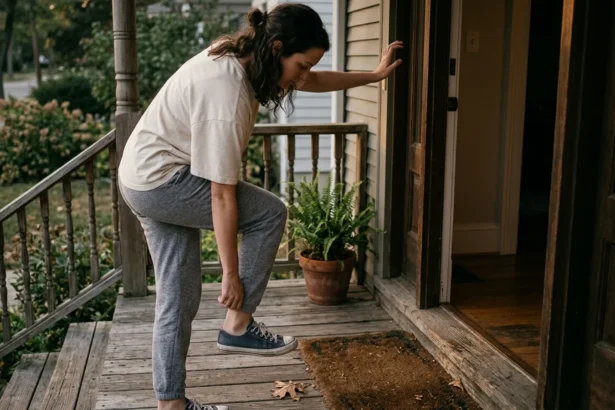
Don’t overthink the shoes. Sneakers, slippers, flip-flops, those weird garden clogs you keep by the back door — all fine. If you feel uncomfortably full, wait 10 to 15 minutes before heading out. If you feel fine, go whenever. The only rule is: don’t change clothes. Changing clothes is where habits go to die.
Step 2: Walk for 10 minutes at gossip pace — around your block, driveway, or hallway
Walk for 10 minutes at roughly 3 mph — the talk-but-not-sing pace. Around the block, up and down the driveway, or — if you live somewhere without a walkable block — pace your hallway. A hallway walk is not sad. A hallway walk is resourceful. Set a timer on your phone for 10 minutes, walk one direction until it goes off, then turn around. You’re done.
Step 3: Come back, lie down guilt-free — you already banked the benefits
This is the best part. When you get back, you’re done. Lie on the couch. Scroll. Watch whatever you were going to watch anyway. The difference is that you’ve already blunted your blood sugar spike, kicked off digestion, primed your body for better sleep, and lowered your stress hormones. The couch now has a clear conscience. This is the lazy fitness routine that actually works because it doesn’t fight the couch — it just borrows 10 minutes first.
Optional: walk after lunch too and double the blood-sugar payoff
If you want bonus points, walk after lunch as well. Walking 10 to 30 minutes after meals helps manage blood sugar levels across the day, and the Japanese study that tracked weight loss had participants walking after both lunch and dinner. But this is optional. One walk after dinner is the whole habit. The second walk is a flex.
What to Expect in Week One (So You Don’t Quit)
Week one is unimpressive, and that’s exactly why most people quit — here’s what’s actually happening so you don’t.
Days 1–3: feels pointless — do it anyway, it’s 10 minutes
You won’t feel different. You’ll walk 10 minutes, come back, and think, “Well, that did nothing.” It did. You just can’t feel blood sugar flattening or stress hormones dipping in real time. Do it anyway. It’s 10 minutes. You’ve spent longer than that tonight deciding what to watch.
Days 4–7: less bloating after dinner, slightly easier to fall asleep
By the second half of week one, you may notice less bloating after dinner — the gastrointestinal benefits of walking 10 to 15 minutes after meals can start to show within days. You might also find it slightly easier to fall asleep, since evening movement is linked to longer sleep duration. Nothing dramatic. Just “huh, I feel a bit less gross tonight.”
Week 2 onward: blood sugar curves flatten, constipation eases, energy stabilizes
By week two, the 4-week studies on digestion start compounding — less gas, less burping, less bloating. Constipation may ease as walking may boost gastrointestinal movement. Your blood sugar curves flatten as your muscles get better at pulling glucose from your bloodstream. Energy stabilizes because you’re not riding the post-dinner sugar roller coaster. None of this requires willpower past day one. It requires shoes and 10 minutes.
No 4am routines. No guilt. No 47-step plans.
This is the whole thing. One walk. Ten minutes. After dinner. Tonight. Go put on whatever shoes are closest to the door.
Sources
- A walk after dinner can make a big difference for your health | News (2026-02-11)
- 7 Reasons Why Walking After Eating Is So Beneficial (2024-01-26)
- Walking After Eating: Benefits, Downsides, and Tips to Get Started (2020-07-13)
- Walking just after a meal seems to be more effective for weight loss than waiting for one hour to walk after a meal (2011-06-09)
- Evening Exercise May Improve Sleep Quality, Study Suggests (2024-07-16)

