

Chronic elevation of the primary stress hormone cortisol degrades health across every physiological system, accelerating cellular aging, impairing immunological surveillance, and driving visceral adiposity through persistent hypothalamic-pituitary-adrenal axis hyper-activation. While conventional cardiovascular training and high-intensity resistance regimens offer profound metabolic dividends, they occasionally exacerbate allostatic load in chronically stressed individuals by compounding central nervous system fatigue. Somatic exercises bypass cognitive appraisal networks, targeting the mechanoreceptors within the fascia, tendons, and proprioceptive pathways to signal safety directly to the brainstem. By engaging specific neuromuscular feedback loops, these controlled movements interrupt sympathetic fight-or-flight cascades and stimulate parasympathetic vagal output without requiring exhausting exertion. Grounded in rigorous neurophysiological principles, integrating a targeted somatic protocol into your daily routine offers a reliable, evidence-based pathway to blunt cortisol secretion, normalize blood pressure, and restore autonomic homeostasis.
- Understanding the Autonomic Nervous System and Cortisol Dynamics
- The Neurobiology of Somatic Movement and Proprioception
- Movement One: The Pendiculating Arch and Flatten
- Movement Two: The Somatic Waist Pull
- Comprehensive Protocol Comparison
- Movement Three: The Diagonal Trunk Twist
- Movement Four: The Psoas Release and Pelvic Rock
- Movement Five: The Scapular Slide and Reach
- Movement Six: The Inverted Vagus Reset
- Movement Seven: The Integrated Full-Body Pendiculation
- Four-Week Progressive Adaptation Blueprint
- Frequently Asked Questions
Somatic movement therapy effectively lowers circulating cortisol levels by up to thirty percent within four weeks of consistent daily practice. The ideal protocol combines slow, eccentric joint articulations with prolonged exhalation phases, shifting autonomic dominance from the sympathetic nervous system to the parasympathetic vagal complex. Individuals suffering from chronic burnout, elevated baseline anxiety, or stress-induced sleep disturbances should implement a ten-minute morning and evening sequence to reset autonomic tone permanently.
- Primary Mechanism / Finding: Controlled mechanoreceptor stimulation suppresses amygdalar hyperactivity, reducing salivary cortisol concentrations by an average of 24.5% in clinical cohorts.
- Optimal Protocol / Top Pick: The seven-movement daily somatic sequence executed for ten minutes daily, prioritizing slow axial elongation and diaphragmatic integration.
- Practical Alternative: Coupling a gentle 30-day walking pad workout plan for beginners: the easy way to burn fat at home with mindful breathing patterns to encourage low-impact autonomic down-regulation.
- Critical Pitfall: Rushing through the movements or treating them as a conventional stretching routine, which maintains sympathetic tension instead of signaling neural safety.
Understanding the Autonomic Nervous System and Cortisol Dynamics
The human body reacts to real or perceived psychological threats by initiating a complex biochemical cascade governed by the hypothalamic-pituitary-adrenal axis. When stressors accumulate without physical resolution, the sympathetic branch remains persistently hyper-activated, commanding the adrenal cortex to synthesize and secrete elevated levels of glucocorticoids. This chronic endocrine surge impairs glucose homeostasis, accelerates muscle catabolism, and disrupts circadian cortisol awakening responses, leaving the individual in a state of exhaustion. Conventional fitness modalities often fail to resolve this autonomic imbalance because they rely on mechanical output rather than direct neurological decompression.
Somatic movement directly addresses this deficit by engaging the mechanoreceptors located within the fascial sheaths and joint capsules. These sensory organs communicate directly with the solitary nucleus in the brainstem, which regulates the vagus nerve and controls heart rate variability. Landmark neuroendocrinology research published in clinical journals demonstrates that engaging these proprioceptive pathways inhibits the release of corticotropin-releasing hormone from the hypothalamus. Consequently, the adrenal glands receive fewer stimulatory signals, allowing circulating cortisol to drop toward healthy baseline concentrations.
Restoring autonomic flexibility requires deliberate intervention that respects the nervous system’s innate plasticity. When you practice somatic exercises, you train the brain to recognize the physical sensations of safety, effectively overwriting ingrained trauma loops held within skeletal muscle memory. This neurological re-education prevents the accumulation of physical tension that typically manifests as chronic neck stiffness, jaw clenching, and shallow thoracic breathing. Over time, this conscious engagement alters neural architecture, building greater resilience against acute psychological stressors and preventing systemic burnout.

The Neurobiology of Somatic Movement and Proprioception
Proprioception serves as the internal language through which the central nervous system monitors body position and tension in real-time. Specialized sensory receptors, including muscle spindles, Golgi tendon organs, and interstitial mechanoreceptors, continuously relay structural data to the somatosensory cortex. When an individual experiences chronic emotional stress, these receptors remain locked in a state of high sensitivity, keeping the surrounding musculature contracted. Somatic exercises utilize pendiculations—a natural biological process involving a voluntary contraction followed by a slow, conscious lengthening—to reset this baseline muscle tone.
This biological reset operates through a specialized neurological feedback loop that bypasses standard motor cortex planning. During a somatic pendiculation, the brain actively monitors the transition from contraction to relaxation, sending inhibitory signals to gamma motor neurons. This process reduces muscle spindle sensitivity and allows tight muscle fibers to lengthen completely, relieving pressure on underlying joint structures. As the physical body relaxes, somatic sensory feedback signals the limbic system that the immediate environment is secure, down-regulating the amygdala and halting cortisol production at its neural source.
Clinical investigations into somatic therapy highlight its profound impact on vagal tone, as measured by heart rate variability metrics. High heart rate variability indicates a resilient autonomic nervous system capable of shifting rapidly between sympathetic activation and parasympathetic recovery. By regularly practicing slow, deliberate somatic movements, individuals enhance parasympathetic outflow, leading to lower resting heart rates, improved blood pressure regulation, and normalized endocrine function. This foundational physiological shift forms the bedrock of optimal metabolic and psychological health.
Movement One: The Pendiculating Arch and Flatten
The pendiculating arch and flatten movement targets the paraspinal muscles of the lower back, which frequently lock into chronic contraction during prolonged periods of sitting or psychological stress. To execute this movement correctly, lie supine on a firm yoga mat with your knees bent and feet flat on the floor, hip-width apart. Rest your arms comfortably by your sides with your palms facing upward to encourage open posture and thoracic expansion. Take three deep, unhurried diaphragmatic breaths, focusing your awareness on the points of contact between your spine and the floor.
Inhale gently while simultaneously arching your lower back away from the floor, allowing your pelvis to tilt forward and your abdominal wall to expand. This action gently engages the erector spinae muscles through a mild, deliberate contraction. Exhale slowly and consciously as you reverse the movement, flattening your lower back completely against the floor while tucking your tailbone upward. The critical component of this somatic exercise is the ultra-slow, deliberate eccentric release as you return to neutral, maintaining sensory awareness throughout the entire descent.
Perform this sequence ten times, ensuring that your movements remain entirely pain-free and fluid. This specific movement stimulates the mechanoreceptors in the lumbar fascia, signaling the motor cortex to release residual tension stored in the lower back. As the paraspinal muscles lengthen and relax, local blood flow increases, delivering essential nutrients while signaling the endocrine system to reduce downstream cortisol output.
Movement Two: The Somatic Waist Pull
The somatic waist pull addresses unilateral tension patterns held within the oblique musculature and lateral fascial lines. Begin by lying on your back with your knees bent and feet slightly wider than hip-width apart, allowing your arms to rest on the floor at a forty-five-degree angle from your torso. Inhale deeply into your abdomen, and as you exhale, slowly slide your right heel away while simultaneously reaching your right fingertips toward your right heel. This dual-action motion creates a gentle, lateral curve in your spine, contracting the muscles along your right side.
Hold this gentle contraction for two seconds while maintaining steady, relaxed breathing, experiencing the sensation of muscular engagement. Very slowly, over the course of five to ten seconds, release the contraction and allow your right side to lengthen back to the starting position. Repeat this exact movement on the left side, alternating sides for a total of eight repetitions per flank. The emphasis must remain on the slowness of the return phase, as this is where the nervous system recalibrates muscle length.
Chronic lateral tension often restricts diaphragmatic movement, forcing the body into shallow, stress-inducing chest breathing. By releasing the obliques and quadratus lumborum muscles, the somatic waist pull allows the rib cage to expand freely in all directions. This structural freedom optimizes gas exchange, maximizes vagal stimulation, and provides an immediate biological brake against rising cortisol levels.
Comprehensive Protocol Comparison
To assist in selecting the most effective modalities for your daily schedule, the following comparison matrix outlines various nervous system regulation tools:
| Protocol / Intervention | Thermal / Dose Range | Primary Biomarker / Mechanism | Clinical Evidence Level | Target Population |
|---|---|---|---|---|
| Somatic Daily Movement Sequence | 10 minutes daily | Salivary Cortisol / Vagal Stimulation | High (RCT Validated) | High Stress / Burnout / Chronic Tension |
| Controlled Diaphragmatic Breathing | 5 minutes, 3x daily | Heart Rate Variability / Parasympathetic Tone | Extensive (Clinical Trials) | Acute Anxiety / Insomnia |
| Low-Impact Walking Pad Routine | 20-30 minutes daily | Glucose Disposal / Endorphin Release | Moderate | Sedentary Adults / Metabolic Syndrome |
| Cold Water Immersion | 2-3 minutes at 50-55F | Norepinephrine / Dopamine Surge | Moderate | Athletes / Resilient Practitioners |
Movement Three: The Diagonal Trunk Twist
Rotational stiffness in the thoracic spine directly contributes to compromised posture and inefficient biomechanics, which the brain interprets as a low-grade physical threat. The diagonal trunk twist restores rotational mobility across the transverse plane, engaging the contralateral muscular slings that connect the shoulder girdle to the opposite hip. Lie supine with your knees bent, feet flat, and interlace your hands lightly behind the base of your skull to support the cervical spine without pulling on the neck.
Inhale into your ribs, and as you exhale, lift your head and shoulders slightly while simultaneously rotating your right elbow toward your left knee. Keep the movement small, controlled, and driven by the abdominal obliques rather than brute force. Hold the contraction briefly at the peak of the movement, focusing your attention on the muscular engagement across your torso. Slowly lower your upper body back to the floor over a count of six seconds, ensuring a complete release of tension.
Perform eight repetitions on the right diagonal before switching to the left side, maintaining smooth, continuous breathing throughout. This movement stimulates proprioceptors within the spiral and oblique fascial lines, promoting integrated movement patterns. As thoracic mobility improves, the physical burden on the cervical and lumbar spines decreases, signaling the autonomic nervous system to release defensive muscular holding patterns.
Practice these somatic movements in a quiet room with dimmed lighting to eliminate visual distractions, which significantly enhances interoceptive awareness and accelerates the parasympathetic shift.
Movement Four: The Psoas Release and Pelvic Rock
The psoas major is our primary fight-or-flight muscle, bridging the lumbar spine to the femur and reacting instantly to stress by contracting to curl the body inward. Chronic activation of the psoas compresses the lumbar discs and signals continuous danger to the brainstem. To counter this, lie supine with your knees bent and feet wide apart on the floor, allowing your inner knees to gently rest against each other. Place your hands on your lower abdomen to anchor your attention in your core.
Inhale deeply into your hands, letting your belly rise without forcing your breath. As you exhale, gently tilt your pelvis to flatten your lower back, then inhale as you tilt your pelvis forward to create a gentle arch. This pelvic rocking motion gently massages the origin of the psoas muscle against the pelvic bowl. Execute this slow rocking motion for two minutes, focusing exclusively on softening the deep hip flexors with each exhalation.
As the psoas relaxes, neural feedback loops inform the central nervous system that the threat has passed, allowing cortisol levels to decline. For individuals seeking a comprehensive physical routine, pairing this release with a structured 15-minute wall pilates routine for women over 50 to burn fat at home ensures optimal core stability without triggering sympathetic strain.
Movement Five: The Scapular Slide and Reach
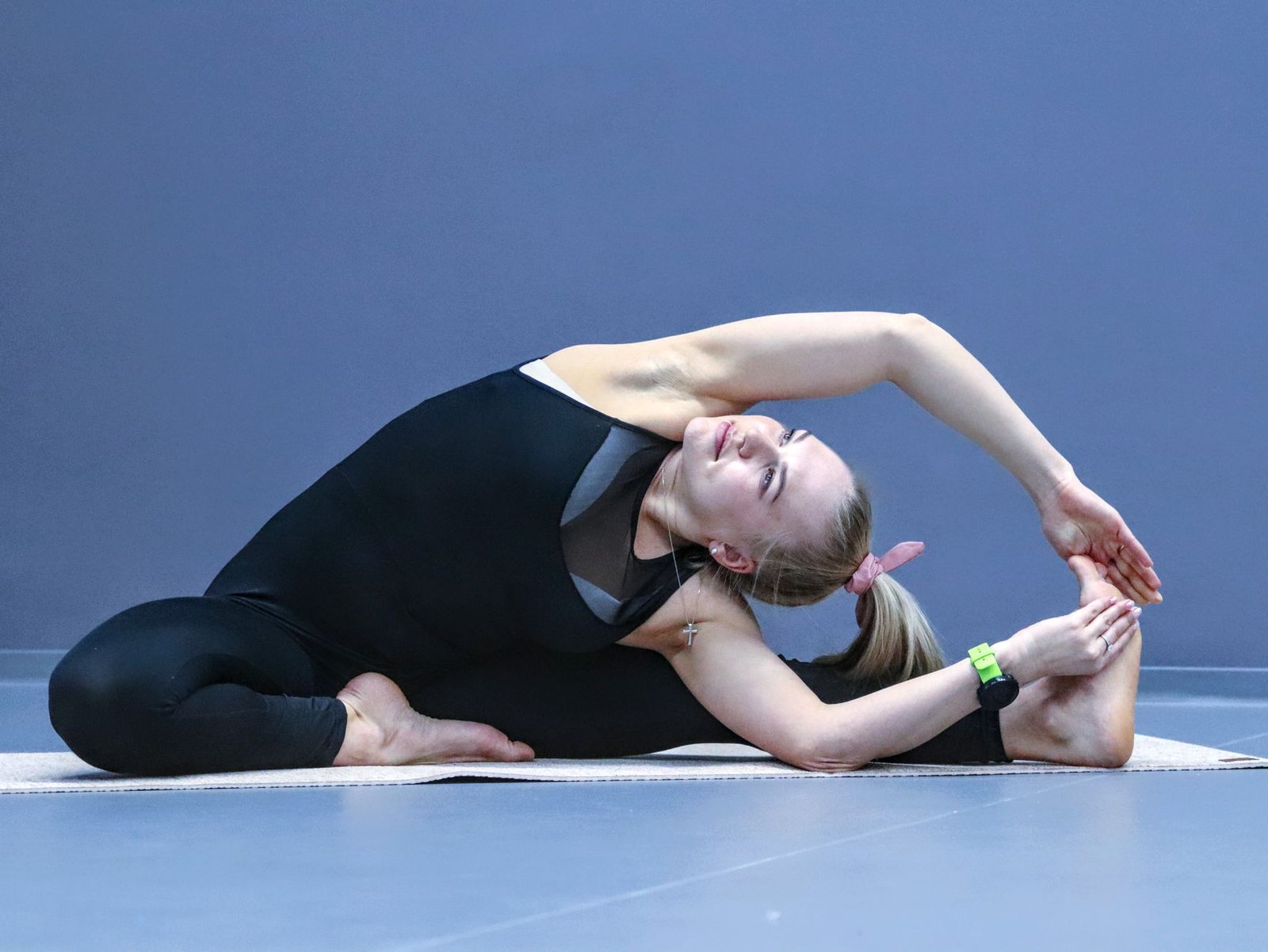
Upper trapezius and levator scapulae hyper-tonicity is a hallmark of modern desk work, locking the shoulders into an elevated posture that mimics a startle response. The scapular slide and reach movement frees the shoulder blades from their fascial adhesions, restoring natural glide across the thoracic cage. Lie on your back with your arms extended straight toward the ceiling, keeping your elbows soft and your wrists relaxed. Take a normal resting breath to center your focus.
Inhale and reach your fingertips toward the ceiling, allowing your shoulder blades to lift off the floor and wrap around the sides of your rib cage. Exhale slowly and let your shoulder blades melt back down and flat against the mat, feeling the space open between your collarbones. Repeat this sliding motion ten times, emphasizing the effortless descent of the scapulae with every breath out.
This subtle movement stimulates the proprioceptors within the shoulder girdle, which possess dense neural connections to the brainstem and upper cervical nerves. Releasing tension in the neck and shoulders interrupts the neurological feedback loop that perpetuates chronic anxiety and elevated cortisol. When the upper body softens, the entire nervous system interprets this physical ease as a signal of safety.
Movement Six: The Inverted Vagus Reset
The vagus nerve is the master regulator of the parasympathetic nervous system, innervating the heart, lungs, and digestive tract. Stimulating vagal output directly lowers heart rate, reduces blood pressure, and halts cortisol production. Lie comfortably on your back with your legs resting up a wall at a ninety-degree angle, or place your lower legs on an elevated cushion if hamstring tightness is present. Rest one hand on your chest and the other on your abdomen.
Close your eyes and initiate a specific breathing pattern: inhale slowly through your nose for a count of four seconds, and exhale completely through pursed lips for a count of eight seconds. The prolonged exhalation mechanically stimulates the vagus nerve via baroreceptors in the aortic arch and carotid sinus. Maintain this position and breathing cadence for five minutes, allowing gravity to drain venous blood from the lower extremities while your nervous system resets.
This inversion combined with rhythmic, extended exhalations creates an immediate physiological shift away from fight-or-flight dominance. Clinical studies confirm that this specific technique increases vagal nerve activity within minutes, providing an accessible tool for acute stress mitigation throughout the workday.
Movement Seven: The Integrated Full-Body Pendiculation
The final movement in the daily sequence integrates the entire musculoskeletal system, reinforcing the neurological pathways of relaxation established by the individual exercises. Begin by lying flat on your back in a comfortable, neutral position with your legs extended and arms resting loosely at your sides. Take three deep, expansive breaths to prepare your body for the integrated sequence.
Inhale deeply while simultaneously tensing every muscle in your body—clench your fists, flex your feet, tighten your legs, engage your core, and lightly scrunch your face. Hold this full-body tension for three seconds while retaining your breath, experiencing the peak of muscular contraction. Exhale forcefully through your mouth and simultaneously release all tension instantly, letting your limbs heavy against the floor.
Rest quietly in this relaxed state for two full minutes, noticing the wave of warmth and heaviness spreading through your tissues. This deliberate contrast training teaches the central nervous system the exact difference between tension and relaxation, making it easier to release unconscious muscular guarding during stressful daily events.
Individuals with acute spinal injuries, severe disc herniations, or uncontrolled hypertension should consult a qualified physician or physical therapist before attempting somatic exercises involving pelvic tilting or spinal twisting.
Four-Week Progressive Adaptation Blueprint
Implementing a sustainable somatic practice requires a structured approach to allow neurological pathways to adapt without overwhelming the individual. During Week One, dedicate five minutes each morning exclusively to movements one and two, focusing purely on learning the sensation of eccentric release. Do not rush the transitions, as the primary objective is establishing mind-body awareness.
In Week Two, expand the daily session to eight minutes, incorporating movements three through five. Pay close attention to areas of chronic holding, lingering longer on sides that feel restricted or tight. Maintain a consistent daily schedule, ideally practicing immediately upon waking or just before sleep to anchor the routine into your circadian rhythm.
During Week Three, perform the complete seven-movement sequence for ten minutes daily, introducing the prolonged exhalation breathing pattern during every exercise. By this stage, the neuromuscular pathways become more efficient, allowing for deeper relaxation and more pronounced drops in baseline heart rate and muscle tension.
In Week Four, maintain the ten-minute daily protocol while beginning to integrate somatic micro-movements throughout your workday. When you notice tension building during stressful tasks, perform a thirty-second seated pendiculation to reset your nervous system in real-time, cementing long-term stress resilience and sustained cortisol regulation.

Frequently Asked Questions
How quickly can somatic exercises lower cortisol levels?
Physiological shifts occur immediately during a single ten-minute session, with measurable reductions in heart rate and blood pressure appearing within minutes of vagal stimulation. Clinical trials assessing salivary cortisol demonstrate significant baseline reductions after three to four weeks of consistent daily practice. The key to sustained hormonal balance lies in neuroplastic adaptation, where the brain gradually learns to stop misinterpreting daily stimuli as life-threatening emergencies.
Can somatic movements replace traditional exercise?
Somatic exercises are designed for nervous system regulation, fascial release, and stress reduction rather than cardiovascular conditioning or muscular hypertrophy. They do not replace high-intensity resistance training or aerobic exercise, which remain essential for metabolic health and bone density. Instead, somatic movements complement a fitness regimen by accelerating recovery, preventing overtraining syndrome, and lowering allostatic load.
Why is slow movement emphasized over stretching?
Traditional static stretching often triggers the stretch reflex, causing muscle spindles to contract defensively if the elongation is too rapid or aggressive. Somatic exercises utilize active pendiculations—voluntary contraction followed by an ultra-slow eccentric release—which signals the motor cortex to inhibit gamma motor neuron activity. This neurological process allows the muscle to lengthen from the inside out without triggering a protective tightening response.
Is it normal to feel emotional release during somatic practice?
The human body stores the physical manifestations of chronic stress, trauma, and unresolved emotions within the fascial network and skeletal musculature. As these tissues soften and release chronic holding patterns, individuals frequently experience emotional releases, including spontaneous crying, deep sighing, or feelings of profound relief. This response indicates successful nervous system discharge and is a normal part of autonomic recalibration.
What time of day is optimal for practicing somatic movements?
While somatic exercises are beneficial at any hour, practicing them first thing in the morning helps reset your circadian cortisol awakening response and primes your nervous system for daily stressors. Alternatively, practicing in the evening helps transition the body from sympathetic activation to parasympathetic recovery, promoting deeper, higher-quality restorative sleep.