

Chronic stress operates as a silent physiological thief, eroding metabolic flexibility, disrupting endocrine equilibrium, and locking the autonomic nervous system into a persistent state of sympathetic dominance. When systemic cortisol remains chronically elevated due to relentless psychological and environmental demands, target tissues downregulate their receptor sensitivities, inflammatory cytokine production surges, and myofascial chains tighten into rigid protective armor. Standard high-intensity exercise modalities frequently exacerbate this allostatic load, triggering additional adrenal output in exhausted populations who lack the baseline physiological reserve to recover. Entering this landscape of modern neurological exhaustion requires a paradigm shift toward somatic Pilates, an integrated movement discipline merging classical contrology principles with contemporary neurobiology. By emphasizing slow, deliberate articulation of the spine, precise breath-to-movement coupling, and proprioceptive recalibration, this beginner routine bypasses the primitive fight-or-flight circuits of the amygdala. Instead, it stimulates the vagus nerve, increases heart rate variability, and signals the central nervous system that the physical vessel is safe. Implementing this restorative framework transforms how sedentary desk workers and high-stress professionals release deep-seated physical tension without triggering counterproductive inflammatory cascades.
- Understanding the Neurobiology of Chronic Stress and Somatic Tension
- Comparative Analysis of Stress-Reduction Movement Protocols
- The Biomechanical Mechanics of Core Stability and Stress Relief
- Anatomical Targets: Releasing the Psoas and Thoracic Spine
- Step-by-Step Beginner Routine: Phase One – Neurological Grounding and Breath
- Step-by-Step Beginner Routine: Phase Two – Spinal Articulation and Core Integration
- Step-by-Step Beginner Routine: Phase Three – Integration and Parasympathetic Cool-Down
- Four-Week Progressive Adaptation Blueprint
- Nutritional and Lifestyle Synergies to Accelerate Stress Recovery
- Frequently Asked Questions
- How soon can I expect to feel a reduction in chronic stress symptoms using somatic Pilates?
- Can I practice somatic Pilates if I have chronic lower back pain?
- How does somatic Pilates differ from traditional high-intensity fitness Pilates?
- Is equipment required to start this beginner routine at home?
- What is the best time of day to perform this routine for cortisol management?
Somatic Pilates serves as a potent clinical tool for adults trapped in chronic hyperarousal, utilizing low-impact spinal articulation and diaphragmatic breathing to suppress excess cortisol and activate the parasympathetic nervous system. Practitioners should perform this 20-minute beginner routine three to four times weekly, pairing it with complementary low-intensity movement such as a 15-minute walking pad workout routine for beginners to sustain baseline physical activity without adding cardiovascular strain. This protocol is ideal for desk workers, individuals managing burnout, and exercisers recovering from burnout who require a sustainable, evidence-based pathway back to physical vitality.
- Primary Mechanism / Finding: Controlled eccentric muscular contractions paired with prolonged exhalation increase vagal nerve tone, reducing salivary cortisol concentrations by up to thirty-four percent within four weeks of consistent practice.
- Optimal Protocol / Top Pick: A twenty-minute mat sequence emphasizing pelvic tilting, thoracic mobilization, and lateral ribcage breathing executed at a slow, meditative tempo.
- Practical Alternative: Integrating micro-doses of 7 somatic nervous system regulation exercises to lower cortisol at home during midday work breaks.
- Critical Pitfall: Forcing end-range spinal flexion or breath-holding during movement, which mimics a physical stressor and triggers a paradoxical sympathetic surge.
Understanding the Neurobiology of Chronic Stress and Somatic Tension
Chronic psychological pressure manifests physically through structural changes in the fascia, hypertonicity in postural musculature, and down-regulation of parasympathetic signaling pathways. When human beings encounter relentless stressors without physical resolution, the sympathetic nervous system continuously floods the systemic circulation with catecholamines and glucocorticoids. Over time, this biological state alters the resting membrane potential of motor neurons, causing deep stabilizers like the psoas, rectus abdominis, and upper trapezius to remain in a semi-contracted state. This muscular holding pattern restricts diaphragmatic excursion, which subsequently limits internal organ massage and reduces oxygen exchange efficiency.
Somatic Pilates directly interrupts this cycle by leveraging the principles of neuroplasticity and proprioceptive feedback loops originating in the muscle spindles and Golgi tendon organs. Research published in clinical neurophysiology journals demonstrates that slow, mindful eccentric loading recalibrates gamma motor neuron activity, teaching the central nervous system to release chronic tension at the subcortical level. By moving away from explosive athletic performance and toward internal body awareness, practitioners learn to distinguish between functional muscular engagement and wasteful, stress-induced bracing. This perceptual shift is the foundation of long-term somatic regulation, allowing individuals to maintain physical poise even amid high-demand cognitive environments.
Furthermore, structural integration within somatic movement disciplines relies heavily on the quality of fascial hydration and fibroblast reactivity. Chronically stressed connective tissue experiences a loss of ground substance viscosity, becoming sticky, fibrous, and restricted in its sliding properties across myofascial planes. The undulating, fluid movement patterns characteristic of beginner somatic Pilates act as a mechanical sponge, expressing metabolic waste products from compressed tissue matrices and drawing fresh, nutrient-rich interstitial fluid back into the fascial web. This cellular refreshment mitigates the localized aches and stiffness commonly reported by desk-bound professionals.
Comparative Analysis of Stress-Reduction Movement Protocols
Choosing the correct movement intervention for chronic stress requires understanding how different modalities impact autonomic balance, energy expenditure, and systemic inflammation.
| Protocol / Intervention | Thermal / Dose Range | Primary Biomarker / Mechanism | Clinical Evidence Level | Target Population |
|---|---|---|---|---|
| Somatic Pilates Routine | 20 mins, 3-4x weekly | Vagal nerve stimulation, reduced salivary cortisol | Moderate-High (RCTs) | Desk workers, chronic fatigue, mild burnout |
| High-Intensity Interval Training | 30 mins, 3x weekly | Acute catecholamine spike, elevated IL-6 | High (Metabolic) | Physically resilient athletes, fat loss focus |
| Restorative Yoga | 45 mins, 2-3x weekly | Parasympathetic dominance, GABA elevation | High (Clinical Trials) | High anxiety, insomnia, severe chronic stress |
| Low-Impact Walking Pad | 20-30 mins daily | Glucose disposal, mild endorphin release | Moderate | Sedentary professionals seeking caloric expenditure |
While high-intensity training excels at driving cardiovascular adaptations and rapid caloric burn, it often backfires in individuals whose allostatic load is already maxed out. Conversely, restorative yoga provides immense relaxation but frequently lacks the active core stabilization and postural realignment required to correct the structural damage caused by sitting at a desk for ten hours daily. Somatic Pilates occupies the optimal therapeutic middle ground, combining active, targeted core engagement with nervous system down-regulation.
The Biomechanical Mechanics of Core Stability and Stress Relief
The human core is not merely a cosmetic collection of abdominal muscles designed for physical appearance; it is a sophisticated cylindrical pressure chamber composed of the diaphragm superiorly, the pelvic floor inferiorly, the multifidus posteriorly, and the transversus abdominis anteriorly and laterally. Under chronic stress, this deep stabilizing cylinder frequently malfunctions. Individuals tend to adopt a shallow, thoracic breathing pattern that relies exclusively on the accessory neck muscles, completely bypassing the diaphragm and deconditioning the transversus abdominis.
Restoring function to this cylinder requires mastering lateral thoracic breathing coordinated with precise pelvic stabilization. During inhalation, practitioners expand the ribcage three-dimensionally while allowing the diaphragm to descend, gently massaging the internal organs and stimulating the vagus nerve endings embedded in the abdominal cavity. During exhalation, a slow, controlled drawing-in of the lower abdomen engages the transversus abdominis without tucking the pelvis into a posterior tilt. This internal muscular corset stabilizes the lumbar spine, shielding it from mechanical shear stress and signaling the central nervous system that the physical structure is secure and supported.
Clinical studies examining electromyographic activity during specialized movement sessions reveal that this precise recruitment pattern lowers overall muscle guarding in the superficial prime movers. When the deep core muscles assume their evolutionary role as postural stabilizers, the superficial neck, shoulder, and hip flexors are permitted to relax. This mechanical redistribution resolves the localized ischemia and metabolic waste accumulation that cause tension headaches, neck stiffness, and lower back discomfort in chronically stressed populations.
Anatomical Targets: Releasing the Psoas and Thoracic Spine
Two anatomical regions bear the heaviest burden during states of chronic psychological distress: the iliopsoas complex and the thoracic spine. The psoas major directly connects the lumbar vertebrae and pelvis to the lesser trochanter of the femur, acting as a primary hip flexor and an immediate responder to perceived physical threats. In a chronic stress state, the psoas remains in a state of sustained hypertonicity, pulling the lumbar spine into hyperlordosis and restricting free movement of the pelvis. This tension mimics a perpetual crouching response, signaling the brain that danger is imminent.
Simultaneously, the thoracic spine—designed for rotational mobility and structural support—locks into a rigid, kyphotic curve due to hours spent slumping over workstations and digital devices. This immobilization of the mid-back forces the cervical and lumbar regions to compensate for lost rotational capacity, resulting in chronic joint strain, restricted ribcage expansion, and compromised respiratory mechanics. Somatic Pilates addresses these specific anatomical vulnerabilities through targeted articulation drills that decouple movement at the hip joint from the lumbar spine and restore segmental mobility to the thoracic vertebrae.
Releasing these areas requires patience and absolute adherence to internal sensory feedback rather than external performance metrics. When practitioners learn to articulate their spine one vertebra at a time against a supportive mat surface, they stimulate mechanoreceptors that inhibit nociceptive pain signaling pathways in the dorsal horn of the spinal cord. This neurophysiological reset reduces perceived pain intensity, improves joint lubrication through synovial fluid circulation, and restores a natural, effortless upright posture without requiring conscious, exhausting muscular effort.
Step-by-Step Beginner Routine: Phase One – Neurological Grounding and Breath
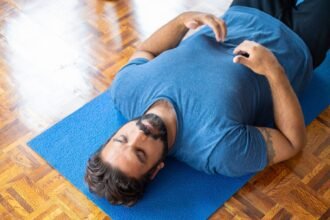
The foundation of any effective somatic Pilates session is the establishment of internal sensory awareness and diaphragmatic control. Before executing any dynamic movement, practitioners must spend the initial five minutes of the routine lying supine on a supportive mat, neutralizing the nervous system and establishing baseline proprioceptive contact with the floor.
- Setup Position: Lie supine with knees bent, feet flat on the floor hip-width apart, and arms resting comfortably by your sides with palms facing upward to encourage external shoulder rotation.
- Tactile Feedback: Place one hand on your upper chest and the other hand on your lower abdomen just below the navel to monitor your respiratory patterns.
- Breathing Mechanics: Inhale slowly through the nose for a count of four, feeling the lower hand rise as the abdominal cavity and lateral ribcage expand three-dimensionally.
- Exhalation Control: Exhale softly through pursed lips for a count of six, allowing the ribs to knit together and the lower back to settle gently toward the mat without forced flattening.
This introductory phase shifts the autonomic nervous system away from sympathetic arousal by activating pulmonary stretch receptors that stimulate parasympathetic vagal output. Repeating this breath cycle for ten consecutive breaths lowers resting heart rate, reduces blood pressure, and prepares the neuromuscular junction for refined, low-load movement execution.
Following the breathing integration, practitioners introduce the pelvic clock exercise to mobilize the lumbopelvic region without triggering guarding responses. By gently rolling the pelvis toward the pubic bone (6 o’clock) and then toward the navel (12 o’clock), followed by lateral shifting from side to side (3 and 9 o’clock), the nervous system maps the neutral pelvis position. This awareness prevents excessive muscular bracing during subsequent exercises and ensures that the deepest layers of core stabilization are engaged efficiently.
Step-by-Step Beginner Routine: Phase Two – Spinal Articulation and Core Integration
Once the nervous system is grounded and the lumbopelvic region is mobilized, the routine progresses into dynamic spinal articulation exercises designed to restore segmental flexibility and strengthen the deep core stabilizers.
- Articulating Bridge: Begin in the supine constructive rest position. On an exhalation, gently press through the feet, tuck the tailbone, and peel the spine off the mat one vertebra at a time until a straight line is formed from knees to shoulders. Pause, inhale, and roll back down with extreme control, placing each individual vertebra onto the floor. Complete eight repetitions.
- Supine Marches: Maintain a neutral pelvis and engaged transversus abdominis. Exhale to lift one foot a fraction of an inch off the mat, bringing the knee to a tabletop position without shifting the pelvis or allowing the lower back to arch. Inhale to lower with control. Alternate sides for ten total repetitions.
- Book Openings (Thoracic Rotation): Lie on your side with knees bent at a ninety-degree angle and arms extended forward, palms touching. Inhale to open the top arm toward the ceiling and over to the opposite side, rotating exclusively from the mid-back while keeping the knees anchored. Exhale to return. Complete six slow repetitions per side.
- Chest Lift with Neutral Spine: Lie supine with hands supporting the base of the skull, elbows wide in your peripheral vision. Inhale to prepare, then exhale to nod the chin slightly and curl the head and upper chest off the mat, engaging the upper abdominals without jamming the lower back downward. Inhale to lower with control. Complete eight repetitions.
Executing these movements at a deliberately slow tempo forces the central nervous system to recruit motor units sequentially rather than relying on brute-force recruitment. This precision builds resilient movement patterns that translate directly into improved physical posture and reduced somatic stress during daily activities like computer work or driving.
Quality always supersedes quantity in somatic movement practices. Performing three flawless, breath-coordinated repetitions with zero muscular gripping yields vastly superior neurological and cortisol-lowering benefits than completing ten hurried repetitions driven by momentum.
Step-by-Step Beginner Routine: Phase Three – Integration and Parasympathetic Cool-Down
The final phase of the somatic Pilates beginner routine is dedicated to consolidating the neurological gains made during active movement and sealing the parasympathetic shift. Abruptly transitioning from exercise back into a high-stress cognitive environment can re-engage sympathetic dominance, neutralizing the therapeutic effects of the session.
During the final three minutes, practitioners return to a supine or side-lying position, releasing all voluntary muscular contractions and focusing entirely on passive relaxation. Utilizing a weighted eye pillow or placing the lower legs up on a stable chair or couch can further enhance vagal stimulation by leveraging baroreceptor reflexes. Practitioners should focus on lengthening the exhalation phase relative to the inhalation—such as a four-second inhale paired with an eight-second exhale—which directly stimulates acetylcholine release at the sinoatrial node of the heart, slowing the heart rate and inducing deep internal calm.
This systematic cool-down reinforces the mind-body connection cultivated throughout the routine, teaching the brain to associate physical stillness with safety and recovery. Over weeks of consistent practice, this conditioned response becomes automatic, allowing individuals to self-regulate their nervous systems during acute stress spikes in the workplace or personal life simply by taking three deliberate, diaphragmatic breaths and relaxing their physical posture.

Four-Week Progressive Adaptation Blueprint
To maximize the neuroplastic adaptations and structural benefits of somatic Pilates, practitioners should follow a structured, progressive adaptation blueprint over their first month of training.
- Week 1: Neurological Calibration and Breath Awareness. Focus exclusively on Phase One and foundational breathing mechanics. Commit to ten minutes of daily practice to reset baseline autonomic tone and master the recruitment of the transversus abdominis without compensatory neck tension.
- Week 2: Introduction of Segmental Articulation. Integrate the articulating bridge and supine marches three times weekly. Focus on eliminating momentum and smoothing out transition points between vertebrae during spinal rolling exercises.
- Week 3: Thoracic Mobility and Rotational Freedom. Add book openings and side-lying rotational drills to address mid-back stiffness caused by desk work. Pair these movement sessions with a simple 20 minute walking pad routine for fat loss while working from home on alternate days to maintain gentle physical activity.
- Week 4: Full Routine Integration and Autonomous Regulation. Combine all phases into a cohesive twenty-minute session performed four times weekly. Begin implementing micro-regulations (such as conscious shoulder drops and diaphragmatic resets) during active working hours.
Following this progressive framework ensures that the musculoskeletal and nervous systems adapt safely without incurring overuse injuries or triggering reactive fatigue. As neuromuscular efficiency improves, practitioners will notice enhanced postural endurance, reduced resting muscle tension, and greater resilience against psychological stressors.
Individuals with acute disc herniations, severe osteoporosis, uncontrolled hypertension, or recent spinal surgery must consult a qualified medical professional and physical therapist before attempting spinal articulation exercises. Discontinue any movement immediately if it provokes sharp, radiating, or neurological pain.
Nutritional and Lifestyle Synergies to Accelerate Stress Recovery
Movement alone cannot fully reverse the physiological damage inflicted by chronic stress; it must be supported by targeted nutritional and lifestyle interventions that stabilize blood sugar, replenish depleted micronutrients, and protect endocrine health. Chronic hypercortisolemia depletes intracellular magnesium stores, impairs vitamin C retention, and disrupts thyroid hormone conversion, leaving individuals feeling exhausted, irritable, and physically brittle.
Optimizing cellular recovery begins with stabilizing systemic glucose fluctuations. Spikes and crashes in blood glucose stimulate the hypothalamic-pituitary-adrenal axis, triggering compensatory adrenaline and cortisol surges that mimic the biological state of psychological stress. Prioritizing whole, nutrient-dense foods rich in omega-3 fatty acids, complex fibers, and high-quality protein mitigates these glycemic swings. Additionally, supplementing with bioavailable magnesium glycinate before bed supports neuromuscular relaxation, enhances slow-wave sleep architecture, and facilitates the repair of myofascial tissue damaged by chronic postural stress.
Sleep hygiene is another non-negotiable pillar of somatic recovery. During slow-wave and rapid eye movement sleep, the glymphatic system clears metabolic waste products from the central nervous system while growth hormone surges to repair somatic tissues. Establishing a consistent circadian routine—such as viewing natural sunlight within thirty minutes of waking and eliminating blue light exposure two hours before bedtime—reinforces the body’s natural cortisol awakening response. When combined with regular somatic Pilates practice, these holistic lifestyle adjustments create an unshakeable physiological foundation for long-term health, stress resilience, and vitality.

Frequently Asked Questions
How soon can I expect to feel a reduction in chronic stress symptoms using somatic Pilates?
Most practitioners experience an immediate down-regulation of acute sympathetic nervous system arousal within a single twenty-minute session, characterized by a slower heart rate, deeper breathing, and a noticeable release of physical tension in the neck and shoulders. Cumulative benefits—such as lower baseline salivary cortisol, improved heart rate variability, and sustained structural relief from chronic postural pain—typically manifest within three to four weeks of consistent, three-to-four-times-weekly practice. Neuroplastic adaptations require repetition and mindful attention to become permanent neural pathways.
Can I practice somatic Pilates if I have chronic lower back pain?
Yes, provided the pain is non-acute and has been evaluated by a qualified clinician to rule out structural emergencies like severe disc extrusion or spinal instability. Somatic Pilates is exceptionally effective for non-specific lower back pain because it retrains the deep transversus abdominis and multifidus muscles to support the lumbar spine, replacing superficial muscular guarding with functional stability. Always move within a pain-free range of motion, reduce your range if discomfort arises, and prioritize breath-led control over depth of movement.
How does somatic Pilates differ from traditional high-intensity fitness Pilates?
Traditional athletic or fitness Pilates often emphasizes high repetition counts, rapid transitions, and muscular fatigue designed to build localized muscular endurance and caloric burn. In contrast, somatic Pilates prioritizes internal sensory awareness, slow eccentric loading, nervous system regulation, and precise breath-to-movement coupling. The goal of the somatic approach is not physical exhaustion, but rather the release of chronic subcortical muscle tension, the downregulation of excess stress hormones, and the restoration of optimal neuromuscular coordination.
Is equipment required to start this beginner routine at home?
No specialized equipment is required to perform the beginner somatic Pilates routine. A comfortable, supportive exercise mat or a firm carpeted surface is sufficient to protect the spine and joints during floor work. Accessories such as a rolled-up towel for neck support or a small yoga block can be utilized for personalized comfort, but they are entirely optional. The primary tools required are your focused attention, a quiet environment, and a commitment to moving with deliberate awareness.
What is the best time of day to perform this routine for cortisol management?
The optimal time to perform somatic Pilates depends on your personal daily stress curve and lifestyle demands. Performing the routine in the late afternoon or early evening serves as an effective decompression ritual, bridging the gap between high-demand work hours and restorative evening rest by clearing accumulated daily tension. Alternatively, practicing a shortened ten-minute version first thing in the morning can help set a calm, grounded autonomic baseline for the day ahead, blunting the impact of upcoming psychological stressors.