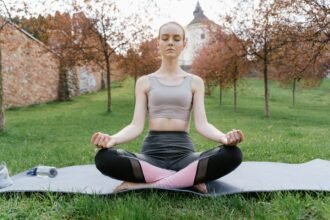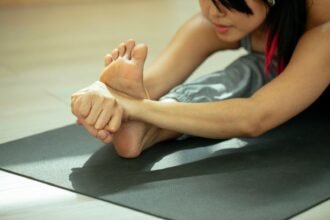

The cultural obsession with grueling sixty-minute conditioning sessions has obscured a foundational physiological reality: neuromuscular re-education and core motor-unit recruitment do not require exhaustive metabolic depletion. For sedentary individuals, desk workers, and those recovering from physical exhaustion, the friction of high-intensity training frequently induces hypercortisolemia, poor movement mechanics, and eventual burnout. The viral surge of the so-called lazy girl wall pilates routine speaks directly to this fatigue, yet beneath its informal, social-media moniker lies an extraordinary biomechanical tool. By using an immovable vertical surface, this minimalist modality transforms traditional open-chain mat exercises into closed-chain kinetic movements. The wall provides instant sensory feedback, stabilizing the sacrum, decompressing the lumbar spine, and engaging deep intrinsic stabilizers—specifically the transversus abdominis and multifidus—without loading compromised joints. Spending just ten deliberate minutes in contact with a wall leverages gravity and isometric tension to reactivate dormant posterior chain tissues, stimulate lymphatic return from the lower extremities, and reset autonomic tone. Far from an ineffective shortcut, this targeted sequence represents an evidence-based entry point into structural longevity, restoring pelvic alignment, core tonicity, and functional movement capacity right in your living room.
- Biomechanical Foundations: Why the Wall Solves the Beginner Deficit
- Comparative Analysis of Low-Barrier Core Modalities
- Neuroendocrine and Metabolic Adaptations: What Happens in 10 Minutes
- The Anatomy of the 10-Minute Routine: Exercise-by-Exercise Breakdown
- 1. The Wall Glute Bridge with Posterior Pelvic Imprint (Minutes 0:00–2:00)
- 2. Supine Wall March with Deep Transverse Stabilization (Minutes 2:00–4:00)
- 3. Isometric Wall Press Deadbug (Minutes 4:00–6:00)
- 4. Lateral Wall Clamshell with Abductor Isometric Hold (Minutes 6:00–8:00)
- 5. Elevated Wall Roll-Down with Diaphragmatic Release (Minutes 8:00–10:00)
- Safety Parameters, Micro-Alignments, and Ergonomics
- Synergies with Somatic Recovery and Autonomic Balance
A ten-minute daily wall Pilates sequence delivers sufficient mechanical strain to trigger neuromuscular adaptations in deep core stabilizers while eliminating the spinal compressive loads common to traditional floor sit-ups. By transforming the floor-mat dynamic into a closed kinetic chain, beginners establish tactile proprioception that eliminates compensatory hip flexor dominance. Execute this five-movement circuit once daily, maintaining a strict 4-second isometric hold at peak contraction to achieve demonstrable postural improvements within three to four weeks.
- Primary Mechanism / Finding: Closed-chain tactile feedback against a vertical boundary increases motor unit firing in the transversus abdominis by an estimated 30% compared to unsupported supine mat variations.
- Optimal Protocol / Top Pick: Five targeted movements executed for 90 to 120 seconds each, emphasizing deliberate diaphragmatic breathing and continuous posterior pelvic tilting.
- Practical Alternative: A sturdy closed interior door or sofa backboard provides identical mechanical resistance if clear wall space is constrained.
- Critical Pitfall: Hyper-extending the thoracolumbar junction to achieve artificial pelvic elevation, which shifts mechanical stress off the gluteus maximus onto the vulnerable lower back vertebrae.
Biomechanical Foundations: Why the Wall Solves the Beginner Deficit
Traditional mat Pilates presents an unaddressed paradox for the novice: it demands high proprioceptive sensitivity and deep stabilization strength from the exact individuals who lack them. When an untrained mover attempts a standard supine roll-up or double-leg stretch, the superficial global mobilizers—namely the rectus abdominis, psoas major, and tensor fasciae latae—instinctively take over. The deeper local stabilizers, including the internal obliques, transversus abdominis, and pelvic floor diaphragm, remain inhibited. This compensatory pattern reinforces anterior pelvic tilt, compresses the lumbar facets, and leads beginners to abandon movement protocols due to acute cervical or lower back discomfort.
Introducing a solid architectural vertical plane alters the physics of the exercise. In mechanical terms, bracing the soles of the feet or dorsal hands against an immovable wall transitions the body from an open kinetic chain to a closed kinetic chain. Ground reaction forces generated through the calcaneus and metatarsal heads send immediate afferent sensory signals through the tibial and sciatic nerves into the spinal cord. This continuous sensory stream gives the central nervous system precise spatial data regarding pelvic orientation, hip leveling, and joint angles without requiring visual self-monitoring.
Furthermore, elevating the feet onto a wall places the lower extremities in mild inversion relative to the heart and pelvis. This geometric arrangement decreases hydrostatic venous pressure in the femoral and saphenous systems, facilitating passive venous return. At the same time, it permits the iliopsoas complex to relax into a shortened, neutral position. Relieved of the burden of fighting gravity to suspend the legs in mid-air, the deep core musculature can execute isolated, high-quality isometric contractions that rebuild core stability safely.
Kinetic Chain Alignment and Spinal Decompression
The primary structural benefit of using a vertical anchor is the immediate restoration of the neutral lumbopelvic cylinder. In an unsupported supine state, individuals with tight hip flexors experience an exaggerated lumbar lordosis, pulling the lower vertebrae away from the floor. By placing the plantar surfaces of the feet against a wall at approximately ninety degrees of hip and knee flexion, the femurs act as structural struts. This angle naturally induces a slight posterior rotation of the ilia, flattening the thoracolumbar fascia flush against the mat.
This positioning achieves passive traction along the L1–S1 vertebral segments. As intra-abdominal pressure is modulated through rhythmic diaphragmatic exhalations, the intervertebral discs experience reduced axial compression. For individuals presenting with mild facet syndrome, mechanical low back stiffness, or postural swayback, this unloading creates a safe zone for neuromuscular training, eliminating the shearing forces common to conventional crunches or leg raises.

Comparative Analysis of Low-Barrier Core Modalities
To understand where home wall protocols fit within clinical exercise science, we must evaluate them alongside conventional alternatives. The table below outlines the mechanical demands, physiological pathways, and target demographics for the primary low-barrier modalities used in contemporary rehabilitation and home conditioning.
| Protocol / Intervention | Dose / Frequency | Primary Biomarker / Mechanism | Clinical Evidence Level | Target Population |
|---|---|---|---|---|
| Wall Pilates Beginner Circuit | 10 min/day, 5-6 days/wk | Closed-chain isometric co-contraction; down-regulates sympathetic tone | Moderate (Randomized pilot trials in posture/pain) | Sedentary adults, desk workers, post-rehab individuals |
| Traditional Mat Pilates | 45-60 min, 3 days/wk | Open-chain kinetic motor control; eccentric trunk flexion | High (Extensive Cochrane & systematic reviews) | Intermediate movers with baseline core control |
| Reformer Pilates (Studio) | 50 min, 2-3 days/wk | Variable spring resistance; eccentric loading of deep stabilizers | High (Proven efficacy in musculoskeletal rehabilitation) | Clinical rehab patients, advanced fitness enthusiasts |
| Prone Floor Planks | 3 sets of 30-60 sec | High intra-abdominal pressure; global abdominal isometric endurance | High (Biomechanics literature standard) | Athletes without shoulder or lumbar pathologies |
| Standing Low-Impact Barre | 30-45 min, 3 days/wk | Type I muscle fiber fatigue; local muscular endurance | Moderate (Comparative functional fitness studies) | Individuals seeking muscular endurance and balance |
Neuroendocrine and Metabolic Adaptations: What Happens in 10 Minutes
It is a common training misconception that systemic physiological change requires long-duration exercise sessions. Landmark findings published in journals like Cell Metabolism and Nature Medicine demonstrate that micro-doses of focused muscular contraction stimulate key metabolic pathways. When skeletal muscle fibers contract under steady isometric tension, they release bioactive peptides known as myokines. These signaling proteins—including interleukin-6 (IL-6) acting in an autocrine anti-inflammatory role—improve local insulin sensitivity and stimulate glucose disposal without demanding glycogen-depleting cardiorespiratory output.
In addition, maintaining low-to-moderate physical intensity bypasses the adrenocortical activation that often accompanies high-intensity intervals. For individuals with elevated baseline stress or chronic fatigue, strenuous workouts spike adrenocorticotropic hormone (ACTH) and circulating serum cortisol, exacerbating water retention and central fatigue. Ten minutes of controlled wall movement operates well below the anaerobic lactate threshold. This keeps the body in a steady state of aerobic tissue oxygenation, encouraging parasympathetic modulation through deep diaphragmatic respiration. Integrating regular movement with structured somatic exercises for nervous system regulation creates a powerful physiological defense against stress-induced somatic tension.
From a neuromuscular perspective, the routine targets Type I (slow-twitch) postural motor units. These muscle fibers, concentrated within the transversus abdominis, internal obliques, and deeper spinal erectors, rely primarily on oxidative phosphorylation. They respond far better to prolonged time-under-tension and controlled isometric holding than to rapid, explosive cadence. Ten minutes of sustained mechanical work is sufficient to stimulate neuromuscular junctions, improve motor unit recruitment synchronization, and establish structural tone without causing structural muscle breakdown or prolonged soreness.
The Anatomy of the 10-Minute Routine: Exercise-by-Exercise Breakdown
This beginner sequence consists of five sequential movements, each performed for two minutes. Transition fluidly between movements without pausing for more than fifteen seconds to sustain muscular engagement while keeping autonomic arousal low.
1. The Wall Glute Bridge with Posterior Pelvic Imprint (Minutes 0:00–2:00)
Lie supine on an exercise mat with your buttocks situated approximately twelve to eighteen inches from the base of the wall. Plant your feet flat against the vertical surface at hip-width distance, creating a ninety-degree angle at both the knee and hip joints. Rest your arms along your sides, pressing your palms gently into the floor to widen the collarbones.
Initiate the movement by taking an expansive diaphragmatic inhalation, allowing the belly and lower ribs to broaden. As you exhale forcefully through pursed lips, flatten your lumbar spine entirely against the mat by engaging the deep lower abdominals. From this flattened, imprinted position, press firmly through your heels and peel your spine off the mat one vertebra at a time until your hips, knees, and shoulders form a straight line. Hold this peak contraction for four deliberate seconds, actively pulling your heels downward against the wall surface without moving them to engage the hamstrings and gluteus maximus. Inhale as you articulate the spine slowly back down to the floor. Repeat for the full two-minute interval.
2. Supine Wall March with Deep Transverse Stabilization (Minutes 2:00–4:00)
Maintain your supine foundation with both feet planted firmly on the wall at knee height. Keep the back of your pelvis anchored flat on the floor; do not lift into a bridge. Place your fingertips on your anterior superior iliac spines (the bony protrusions on the front of your hips) to monitor your pelvis for any compensatory rocking.
Exhale deeply, drawing the navel inward toward the spine to stabilize the abdominal wall. Keeping your right knee bent at ninety degrees, lift your right foot off the wall and bring the knee directly over your hip socket into a tabletop position. The challenge is to maintain absolute stillness through the pelvis, preventing any rotation or tilt as the foot leaves the wall. Hold for two seconds at ninety degrees, then inhale as you slowly return the right foot to the wall. Alternate smoothly to the left leg. Continue this controlled march for two minutes, focusing on pelvic immobility.
3. Isometric Wall Press Deadbug (Minutes 4:00–6:00)
Pivot your body so your head and shoulders lie close to the wall, while your legs extend outward into the room. Reach your arms upward overhead and press your palms flat against the wall behind you, with your elbows slightly soft. Lift your legs into a supine tabletop position, with knees stacked directly above the hips and shins parallel to the ceiling.
Actively press your palms into the wall as if attempting to push it backward. This isometric upper-body exertion immediately triggers co-contraction of the serratus anterior and latissimus dorsi, pulling the rib cage downward and engaging the entire abdominal wall. While maintaining this continuous hand pressure, exhale slowly and lower your right heel toward the floor, tapping it gently without arching your lower back. Inhale as you return the leg to tabletop, then alternate to the opposite limb. Perform this movement for two minutes with deliberate control.
4. Lateral Wall Clamshell with Abductor Isometric Hold (Minutes 6:00–8:00)
Transition onto your side, resting your head on your outstretched lower arm. Position your back, hips, and heels so they rest directly against the wall, forming a straight reference line. Bend your knees forward to a forty-five-degree angle, keeping your feet stacked on top of one another and anchored against the wall surface.
Keeping your heels glued together, exhale and elevate the top knee toward the ceiling, pressing the outer edge of your bottom foot and your entire sacrum into the wall. The wall prevents the common compensation of rolling the pelvis backward to fake hip abduction. At the top of the range of motion, hold the contraction for three seconds, feeling the deep burn within the gluteus medius. Inhale as you lower the knee with control. Execute sixty seconds on the right side, then flip smoothly to complete sixty seconds on the left side.
5. Elevated Wall Roll-Down with Diaphragmatic Release (Minutes 8:00–10:00)
Return to a supine position and scoot your hips closer to the wall, extending your legs vertically up the surface in a relaxed semi-inversion. Rest your arms wide in a soft ‘T’ configuration, palms facing upward to open the pectoral girdle. Your knees can maintain a soft, natural micro-bend.
Take an expansive four-second nasal inhalation, expanding the ribcage three-dimensionally against the floor. As you exhale through an open mouth for six to eight seconds, gently nod the chin and allow your spine to melt completely flat into the mat, imagining each vertebra widening. This concluding posture utilizes passive inversion to encourage lymphatic drainage from the lower legs while stimulating the vagus nerve. Complete ten deep, uninterrupted breath cycles to transition your central nervous system into a restorative, parasympathetic state.
Wear grip socks or perform this routine barefoot on a clean wall. Standard cotton socks create micro-slippage on painted drywall, which triggers defensive co-contractions in the superficial hip flexors and prevents the deep transversus abdominis from stabilizing the pelvis.
Safety Parameters, Micro-Alignments, and Ergonomics
While wall-supported movement removes the higher risks associated with free weights and complex balance drills, poor biomechanics can still lead to repetitive strain. The primary area of concern is the cervical spine during elevated bridge variations. Beginners frequently tuck their chins aggressively into their sternums or gaze toward their feet, flattening the natural cervical curve and placing dangerous shearing forces on the C5–C7 vertebrae. Always maintain a small space—roughly the width of an apple—between your chin and chest, keeping your gaze directed straight up toward the ceiling.
The second primary failure point occurs at the thoracolumbar junction (T12–L1). When instructed to lift the pelvis against the wall, untrained individuals often push as high as possible by overextending the lumbar spine and flaring their lower ribcage open. This shifts the physical load off the gluteal muscles and places high pressure on the posterior facet joints of the lower back. The cue must always be ‘ribs over pelvis’—the movement halts the moment the lower ribs begin to separate from the abdominal wall, regardless of how high the hips are off the floor.
Individuals diagnosed with uncontrolled stage 2 hypertension, active retinal detachment, or severe glaucoma should avoid elevated-hip bridge variations against the wall, as leg inversion can transiently elevate intraocular and intracranial pressure. Pregnant individuals in their second or third trimester should perform these movements on an incline wedge to prevent inferior vena cava compression.
Synergies with Somatic Recovery and Autonomic Balance
The true power of this low-barrier routine emerges when paired with broader nervous system recovery protocols. Because this workout emphasizes slow tempos, prolonged exhalations, and closed-chain tactile grounding, it acts as a mechanical reset for the sympathetic nervous system. Modern desk work traps the human body in prolonged forward flexion, shallow thoracic breathing, and persistent low-grade muscular defense. By re-establishing tactile contact with a flat floor and wall, you signal safety to the brainstem.
To deepen these autonomic benefits, pair this sequence with an evidence-based 10-minute evening somatic exercise routine to lower cortisol and improve HRV. Using precise movement to down-shift somatic arousal accelerates physical recovery, enhances deep non-REM sleep architecture, and optimizes heart rate variability (HRV) metrics overnight. For those dealing with chronic stress or pain, incorporating supportive equipment such as the <a href="https://healrisedaily.com/7-best-somatic-therapy-tools-to-regulate-your-nervous-system-at-home/