


For decades, conventional fitness orthodoxy insisted that meaningful fat loss required grueling, glycogen-depleting bouts of high-intensity interval training or monotonous hour-long sessions on commercial cardiovascular equipment. Modern metabolic physiology paints a radically different picture. Prolonged physical inactivity induces acute enzymatic suppression, specifically down-regulating skeletal muscle lipoprotein lipase (LPL)—a primary gatekeeper enzyme responsible for cellular triglyceride uptake and non-esterified fatty acid oxidation. When individuals spend eight to ten hours immobilized at a desk, their cellular machinery shifts into a dormant, insulin-resistant state that cannot be fully corrected by an isolated thirty-minute gym session. The introduction of compact under-desk walking pads has revolutionized this dynamic by lowering the energetic and psychological barriers to baseline physical exertion. By engaging the massive muscular architecture of the lower extremities in brief, deliberate micro-bouts, a structured 15 minute low impact walking pad routine for beginner weight loss reignites cellular energy turnover without eliciting the crippling orthopedic strain, systemic inflammation, or sympathetic central nervous system fatigue associated with aggressive exercise regimens.
- Comparative Analysis of Low-Impact Metabolic Interventions
- The Molecular Biology of Micro-Bout Ambulation: Why 15 Minutes Works
- Lipoprotein Lipase Kinetics and Skeletal Muscle Perfusion
- GLUT4 Translocation Independent of Insulin Signaling
- Walking Pad Mechanics: Equipment Selection, Ergonomics, and Footwear Architecture
- Belt Surface Dimensions, Motor Torque, and Shock Absorption
- Biomechanics, Stride Cadence, and Joint Shear Forces
- The 15-Minute Beginner Walking Pad Protocols
- Protocol A: The Postprandial Glucose Blunter (Metabolic Focus)
- Protocol B: The Heart-Rate Ramp (Aerobic Capacity & Lipolysis)
- Protocol C: The Dual-Cadence Power Interval (NEAT Amplification)
- The 4-Week Progressive Walking Pad Adaptation Blueprint
A 15-minute low-impact walking pad routine executed at 2.0 to 2.8 miles per hour blunts postprandial glucose excursions by up to 34%, restores suppressed endothelial flow-mediated dilation, and elevates daily non-exercise activity thermogenesis (NEAT) without elevating cortisol. For sedentary beginners or those carrying excess weight, this micro-dose approach bypasses joint friction while optimizing lipid oxidation enzymes. Performing this routine once or twice daily, specifically within forty-five minutes of consuming carbohydrate-dense meals, provides a clinically validated foundation for sustainable visceral adipose reduction.
- Primary Mechanism / Finding: Sustained rhythmic muscular contraction of the soleus and quadriceps triggers GLUT4 glucose transporter translocation to the cell surface completely independent of systemic insulin secretion.
- Optimal Protocol / Top Pick: A progressive 15-minute tripartite structure: 3 minutes at 1.8 mph (warm-up), 9 minutes at 2.4–2.8 mph (oxidative zone), and 3 minutes at 1.6 mph (active recovery flush).
- Practical Alternative: Accumulating three separate 5-minute micro-walks across an eight-hour working block yields comparable glycemic modulation if a single 15-minute block is unavailable.
- Critical Pitfall: Walking barefoot or in unsupportive flat socks on walking pads introduces repetitive strain to the plantar fascia and Achilles tendon due to the non-yielding under-deck surface.
Comparative Analysis of Low-Impact Metabolic Interventions
To evaluate how a compact walking pad protocol fits into a broader metabolic reconditioning strategy, we must compare its physical impact, cellular targets, and accessibility against other common modalities. While high-intensity routines burn slightly more gross calories per minute, they carry substantially higher dropout rates and joint ground reaction forces.
| Protocol / Intervention | Thermal / Dose Range | Primary Biomarker / Mechanism | Clinical Evidence Level | Target Population |
|---|---|---|---|---|
| 15-Min Flat Walking Pad (2.4 mph) | 55–75 kcal per bout | Non-insulin-mediated GLUT4 / Soleus LPL | Level 1 (Randomized Trials) | Sedentary beginners, desk workers, joint-compromised |
| 15-Min Incline Walking Pad (5% grade, 2.0 mph) | 80–110 kcal per bout | Posterior chain recruitment / VO2 elevation | Level 2 (Controlled Cohorts) | Intermediate beginners seeking progressive overload |
| 45-Min Traditional Outdoor Walk | 180–240 kcal per session | Systemic mitochondrial turnover / Nitric oxide | Level 1 (Epidemiological & RCT) | General population with outdoor access and flexible time |
| Steady-State Desk Ergometer / Pedaler | 45–65 kcal per bout | Quadriceps glycogenolysis / Minimal core activation | Level 2 (Comparative Ergonomics) | Individuals requiring seated rehabilitation or severe hip immobility |
| Micro-Bouts (3x 5-min walking pad pulses) | 60–80 kcal cumulative | Intermittent vascular shear stress / Glycemic flattening | Level 1 (Metabolic Crossover Trials) | Time-constrained corporate professionals with high glucose spikes |

The Molecular Biology of Micro-Bout Ambulation: Why 15 Minutes Works
The human body does not assess energy expenditure on an arbitrary sixty-minute institutional standard. At the cellular level, metabolic adaptation occurs along an immediate continuum dictated by cellular energy charges (AMP-to-ATP ratios) and mechanotransduction. Research published in Cell Metabolism and The Lancet Diabetes & Endocrinology has repeatedly demonstrated that breaking up sustained periods of seated inactivity with brief low-intensity walking triggers immediate signaling cascades that halt systemic lipotoxicity.
Lipoprotein Lipase Kinetics and Skeletal Muscle Perfusion
Lipoprotein lipase (LPL) is bound to the luminal surface of capillary endothelial cells in skeletal muscle and vascular beds. Its primary physiological role is to hydrolyze core triglycerides circulating in very-low-density lipoproteins (VLDL) and chylomicrons into free fatty acids and glycerol. Under extended sitting conditions, physical stillness down-regulates LPL activity by up to 90% in postural muscles within two hours. This dramatic shutdown inhibits the clearance of circulating fats, forcing them toward ectopic storage sites, including visceral adipose depots surrounding the liver and heart.
A simple 15-minute low-impact walking bout acts as a rapid pharmacological wake-up call for this enzymatic pathway. The repetitive low-tension contractions of the soleus, gastrocnemius, and quadriceps generate continuous mechanical shear stress on capillary walls. This mechanical stimulus prompts an immediate up-regulation of local LPL synthesis and transport. Within minutes, the local rate of fatty acid uptake surges, allowing the body to clear circulating lipids and utilize them for basic mitochondrial ATP production rather than packaging them into central fat tissue.
GLUT4 Translocation Independent of Insulin Signaling
Ordinarily, the hormone insulin serves as the biological key that binds to its cell-surface receptor, triggering a kinase phosphorylation cascade that moves glucose transporter type 4 (GLUT4) storage vesicles from the intracellular space to the cell membrane. In individuals with sedentary physiology, excess body weight, or early metabolic syndrome, this insulin signaling pathway becomes blunted, leading to sustained hyperglycemia, hyperinsulinemia, and compensatory de novo lipogenesis.
Physical movement entirely bypasses defective insulin signaling. As you step onto a walking pad, the repetitive depolarization of muscle cell membranes increases intracellular calcium ions, which activates calcium/calmodulin-dependent protein kinase (CaMK). Simultaneously, the consumption of cellular ATP increases the intracellular concentration of AMP, stimulating 5′-AMP-activated protein kinase (AMPK). Together, CaMK and AMPK independently order GLUT4 vesicles to translocate directly to the cell surface. Consequently, walking for just 15 minutes clears circulating glucose from your bloodstream into working muscles without requiring an insulin spike, effectively preventing excess carbohydrates from being stored as body fat.
Walking Pad Mechanics: Equipment Selection, Ergonomics, and Footwear Architecture
A walking pad is distinct from a commercial gymnasium treadmill. It features a narrower belt, an ultra-low profile deck, and a motor designed specifically for sustained low-speed torque rather than high-velocity running. Utilizing one correctly demands attention to mechanical setup and proper ergonomic execution to avoid biomechanical compensations.
Belt Surface Dimensions, Motor Torque, and Shock Absorption
Standard under-desk walking pads measure between 40 and 48 inches in length and roughly 15 to 18 inches in width. Because the belt is shorter than a standard fitness track, users often make the mistake of shortening their natural stride cadence or adopting a choppy, anxious gait. The ideal motor must possess continuous horsepower (CHP) ratings between 1.5 and 2.5. Lower-grade motors lack sufficient low-speed rotational torque, causing micro-stutters when your heel plants. These micro-stutters transfer abrupt shear force directly into the knee joint and patellar tendon.
Furthermore, because these units feature slim profiles to facilitate storage under couches or standing desks, their internal shock absorption elastomer decks are considerably thinner than commercial treadmills. The walking deck possesses very little natural deflection. Walking across this unforgiving surface for 15 minutes continuously without proper foot support can create repetitive stress waves that travel up through the calcaneus into the lower lumbar spine.
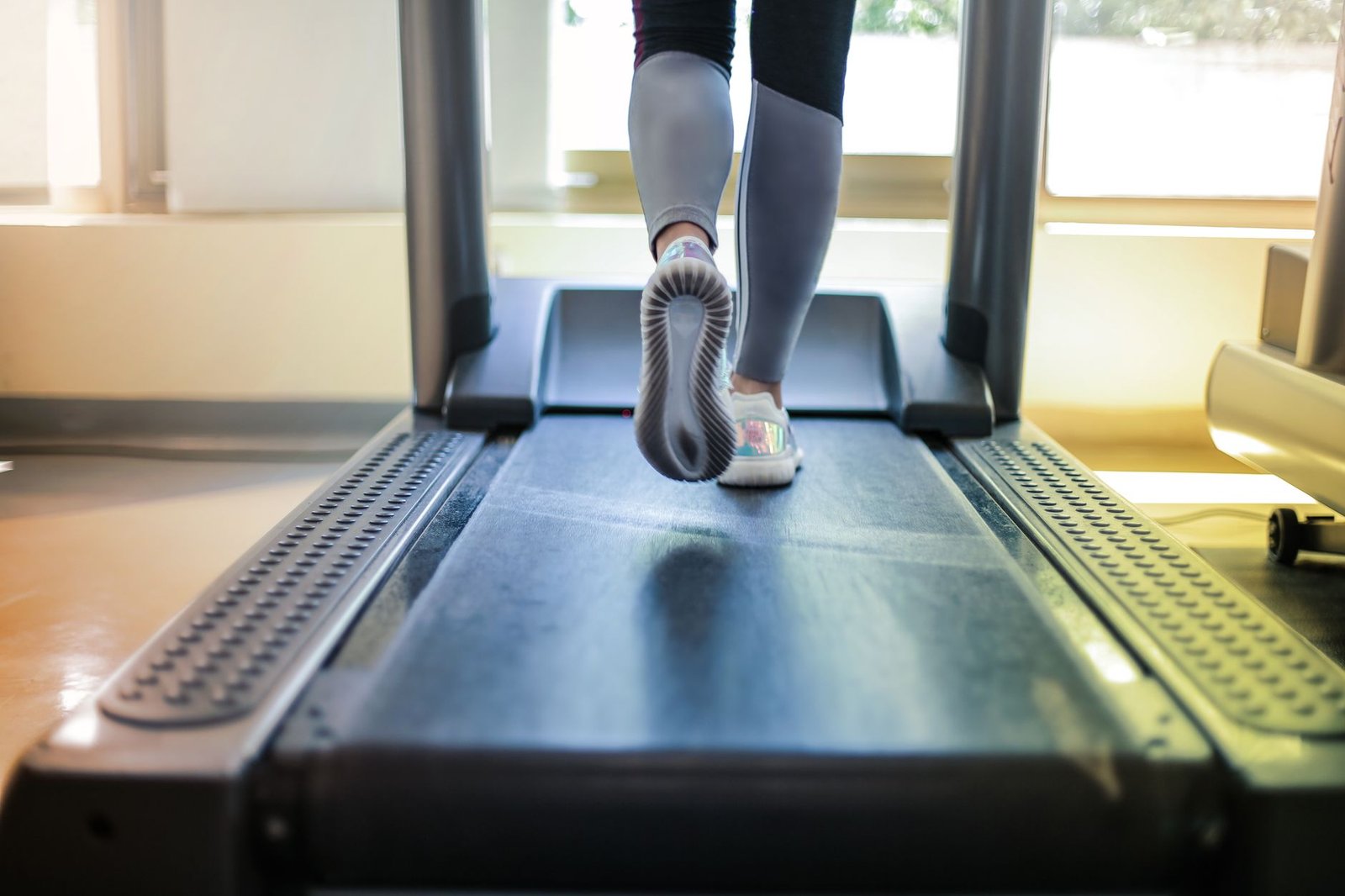
Never walk on a walking pad completely barefoot or in basic cotton socks. The thin composite running boards lack the rebound cushioning of high-grade tracks. Striding barefoot on a moving belt exposes the plantar fascia and metatarsal heads to sustained ground reaction forces without arch support, rapidly increasing the risk of acute plantar fasciitis or Achilles tendinitis. Always wear a supportive, zero-drop or low-drop athletic shoe with clean rubber outsoles.
Biomechanics, Stride Cadence, and Joint Shear Forces
Maintaining optimal joint alignment during a compact walking routine is vital for preventing overuse injuries. Many beginners stare down at their feet or monitor console, forcing the cervical spine into forty-five degrees of forward flexion. This unnatural posture places significant muscular load on the upper trapezius and levator scapulae, compounding poor desk posture. Keep your gaze directed horizontally forward, retract your shoulder blades gently, and allow your arms to swing naturally in opposition to your lower limbs.
Aim for a target cadence of 95 to 110 steps per minute. Focus on landing softly on the midfoot or rear-foot with minimal impact, rolling smoothly forward onto the hallux (big toe) for an active push-off. This kinetic chain execution engages the posterior gluteal complex and deep soleus muscles. When executed properly, ground reaction forces remain within 1.0 to 1.2 times body weight, presenting virtually zero risk to degenerative knee cartilage, unlike outdoor jogging which exposes joints to 2.5 to 3.0 times body weight.
The 15-Minute Beginner Walking Pad Protocols
Executing an intentional routine produces vastly superior outcomes compared to simply shuffling your feet aimlessly while distracted. Below are three specialized, clinically structured 15-minute protocols designed to target specific physiological adaptations. Beginners should start with Protocol A before progressing to higher speed variations.
Protocol A: The Postprandial Glucose Blunter (Metabolic Focus)
This protocol is engineered specifically to manage post-meal glycemic rises and stimulate insulin-independent muscle uptake. It should be executed within 30 to 45 minutes after concluding your largest meal of the day.
- Minutes 0:00 – 3:00 (Capillary Warming Phase): Speed set to 1.6 – 1.8 mph. Focus on deep diaphragmatic nasal breathing (four seconds in, six seconds out) to maintain autonomic equilibrium. Focus on an exaggerated heel-to-toe roll to warm up synovial fluid in the ankles and knees.
- Minutes 3:00 – 11:00 (Steady-State GLUT4 Drive): Increase speed to 2.2 – 2.5 mph. Maintain an upright, open chest. Your breathing rate will elevate slightly, but you should remain fully capable of carrying on a conversation without gasping. This is the physiological sweet spot for continuous glucose uptake without elevating systemic stress hormones.
- Minutes 11:00 – 15:00 (Post-Effort Metabolic Flush): Reduce speed to 1.8 mph for two minutes, then 1.4 mph for the final two minutes. Allow your heart rate to drift back to baseline while keeping postural muscles active to prevent venous pooling in the calves.
Protocol B: The Heart-Rate Ramp (Aerobic Capacity & Lipolysis)
This routine introduces gentle speed transitions to shift the energetic demand toward Zone 1 and early Zone 2 cardiovascular training, elevating oxygen uptake and burning free fatty acids.
- Minutes 0:00 – 2:00 (Baseline Priming): Speed set to 1.8 mph. Establish stable stride alignment and engage your core lightly.
- Minutes 2:00 – 6:00 (Aerobic Engagement): Speed set to 2.4 mph. Swing your arms deliberately at ninety-degree angles to engage your latissimus dorsi and core stabilizers.
- Minutes 6:00 – 11:00 (Oxidative Peak): Speed set to 2.8 – 3.0 mph. This pace demands intentional stepping and increases metabolic rate to roughly 3.5 to 4.0 METs (metabolic equivalent of task), multiplying resting caloric expenditure by fourfold.
- Minutes 11:00 – 13:00 (Step-Down Recovery): Reduce speed to 2.2 mph. Keep moving rhythmically as lactic acid concentrations clear completely.
- Minutes 13:00 – 15:00 (Thermal Normalization): Speed set to 1.5 mph. Return to nasal-only breathing.
Protocol C: The Dual-Cadence Power Interval (NEAT Amplification)
By alternating between a comfortable baseline pace and a brisk walking tempo, this interval approach induces slight perturbations in cardiac output and cellular energy demands without joint friction or tissue breakdown.
- Minutes 0:00 – 2:00: Warm-up pace at 2.0 mph.
- Minutes 2:00 – 4:00: High-cadence pulse at 2.8 mph. Shorten stride slightly, increase turnover rate.
- Minutes 4:00 – 6:00: Recovery tempo at 2.0 mph. Steady nasal breathing.
- Minutes 6:00 – 8:00: High-cadence pulse at 3.0 mph. Actively push off through the toes.
- Minutes 8:00 – 10:00: Recovery tempo at 2.0 mph.
- Minutes 10:00 – 12:00: High-cadence pulse at 3.0 mph. Focus on tall posture.
- Minutes 12:00 – 15:00: Extended cool-down taper from 2.0 mph down to 1.4 mph.
To ensure you are operating within the optimal fat-oxidation zone during these 15-minute sessions, execute the nasal breathing check. If you can maintain comfortable, rhythmic inhalation and exhalation exclusively through your nose without opening your mouth, your arterial lactate concentration remains below 2.0 mmol/L. This confirms you are burning predominantly fatty acids rather than relying on rapid carbohydrate breakdown.
The 4-Week Progressive Walking Pad Adaptation Blueprint
Achieving sustained body composition changes through low-impact walking requires progressive overload, just like any other resistance or endurance regimen. The human neuromuscular system adapts rapidly to repetitive movement patterns. If the stimulus remains static, caloric and metabolic benefits gradually diminish. Follow this structured four-week progressive roadmap to systematically build systemic endurance, improve posture, and elevate daily fat oxidation.
Week 1: Neuro-Motor Familiarization and Kinetic Alignment
Your primary goal during the initial seven days is establishing basic movement comfort, checking balance on a moving surface, and adapting soft tissues to the unique dynamics of an electric belt. Execute Protocol A once daily, five days per week. Avoid working on a keyboard or holding a smartphone during these sessions. Dedicate this time solely to kinesthetic awareness: maintain a level pelvis, draw the lower abdominals inward slightly, and land softly on the deck. Focus on resting comfortably afterward to allow joint connective tissues to adapt without inflammation.
Week 2: Cadence Titration and Continuous Pacing
During the second week, your lower extremity tendons and calf complexes have adjusted to the repetitive ground reaction force. Transition to Protocol B for four sessions, keeping Protocol A for one post-dinner session. Increase your working speed from 2.5 mph to 2.7 mph during peak intervals. To complement this aerobic reconditioning, consider pairing this phase with our 7-day somatic exercise routine for high-functioning anxiety and cortisol relief. Integrating nervous system down-regulation prevents systemic stress from blunting the fat-burning benefits of your daily walking pad blocks.
Week 3: Incline Integration or Resistance Loading
By week three, your baseline cardiovascular efficiency will have improved noticeably. If your walking pad model features a manual or automated incline setting, introduce a 2% to 3% grade during the working phases of Protocol B. An incline of merely 3% increases hamstring and gluteus maximus recruitment by more than 35% while sparing the knee joint from impact. If your pad has a fixed flat deck, maintain speed at 2.8 mph while introducing an arm-drive emphasis, or add a light weighted vest (3% to 5% of your total body mass). Never use ankle weights, as they place unnatural torque on the hip labrum and lower back.
Week 4: Multi-Session Stacking and Autonomous Metabolic Rhythm
During week four, advance to multi-session stacking. Instead of a single 15-minute walk, complete two separate 15-minute bouts per day: one mid-morning to reignite metabolic activity after hours of focused work, and one forty minutes following your evening meal to clear glucose. Many practitioners find great success pairing this routine with low-impact bodyweight strength work, such as the exercises found in our <a href="https://healrisedaily.com/15-minute-wall-pilates-routine-for-women-over-50-to-burn-fat-at-home/