



After ten years of uncertainty, Lauren’s diagnosis sheds light on polyendocrine ovarian metabolic syndrome (POMS), a major hormonal disease whose signs must be identified to break patients’ isolation.
A woman’s journey with hormonal imbalances often resembles a long journey for answers. Naming the disease allows us to begin appropriate follow-up and restore the quality of life that has been damaged by misunderstood symptoms. The history of this disease is evolving, representing a major milestone for millions of patients.
Ten years of wandering around to make a diagnosis
At 28, Lauren is finally saying something about a decade of doubt and psychological distress. For many years, the medical profession ignored the first clinical signs of the disease. A diagnosis made in April 2026 serves as a treatment release. Before this date, his daily life revolved around heavy rituals to hide his condition. the Hair camouflage Social avoidance demonstrates the weight of his isolation. Why do we still need average From 5 to 10 years in France To determine pathology? Confusion with minor hormonal disorders in adolescence significantly slows down medical recognition.
Why a diagnosis changes lives
For many women, diagnosis represents a major psychological milestone. Putting a name to long-misunderstood symptoms often helps reduce feelings of guilt and isolation. Patient associations regularly stress the importance of this medical recognition in the course of care.
Medical nomenclature will evolve in 2026
The medical term changes to accurately reflect the reality of the disease. At the European Endocrinology Congress in May 2026, PCOS is officially the answer Polyendocrine ovarian metabolic syndrome (POMS). This international consensus is based on consultation 14,000 patients. The old shorthand misled patients by provoking cysts, when in fact the ovaries were present Immature follicles. The new name emphasizes the multisystem, endocrine and metabolic aspect of this condition. This disease affects closeOne in eight women in the world.
Identify the main clinical manifestations
It remains one of the most obvious symptoms Hirsutismis located in 70% of cases. This excessive hair growth invades the so-called male areas such as the face, back or torso, under the influence of hyperandrogenism. One study highlights that the risk of experiencing severe psychological distress is significantly increased in women with marked hirsutism, with a rate of suicidal thoughts up to 7 times higher than average in the absence of care.
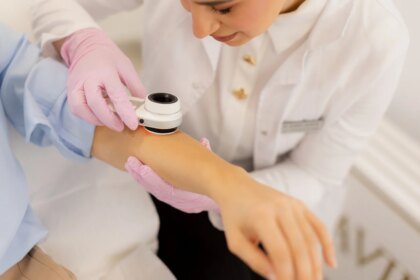
Patients also notice a phenomenon “Velvety leather“ or Acanthosis nigricans. Often confused with poor hygiene, hyperpigmentation in the folds of the neck or armpits directly indicates Insulin resistance. Finally, irregular menstruation, where the duration of the cycle exceeds 35 to 40 days, constitutes the first warning sign of an ovulation disorder, which leads to difficulty getting pregnant.
Cardiovascular risk is often overlooked
Beyond gynecological disorders, OPMS is often accompanied by an increase in metabolic risk. Specialists note increased insulin resistance, excess weight, high blood pressure, and cholesterol abnormalities in affected patients. Without proper management, these factors increase the risk of type 2 diabetes and cardiovascular disease in the long term.
A global therapeutic approach is required
Clinicians validate the presence of SMOP using the Rotterdam criteria. The patient must show at least two of the following three signs:
- Clinical or biological hyperandrogenism.
- Menstrual disorders.
- The appearance of a specific ovary on ultrasound.
Monitoring requires coordination between the gynecologist, endocrinologist and dermatologist. to’A healthy lifestyle forms the foundation Of treatment. Following a balanced diet and regular physical activity helps regulate metabolism and prevent long-term complications, such as: Type 2 diabetes.